GIS

GIS Slovakia 2026

Hits: 260

Konferencia GIS Slovakia sa konala v reprezentatívnych priestoroch Zrkadlovej siene Primaciálneho paláca v Bratislave v dňoch 23. – 24. marca 2026. Podujatie bolo tematicky zamerané na dva hlavné okruhy: klimatické zmeny a harmonizáciu priestorových údajov. Obe oblasti dnes predstavujú kľúčové výzvy pre nás všetkých.

Klimatické zmeny sú fenoménom, ktorý čoraz výraznejšie ovplyvňuje fungovanie krajiny aj miest. Hoci sa ich dopady často zvýrazňujú vo vyšších nadmorských výškach, väčšina populácie žije v nížinných urbanizovaných oblastiach, kde sa prejavujú najmä vo forme tepelných ostrovov, extrémov počasia či tlaku na mestskú infraštruktúru. Aj preto je mimoriadne cenný pohľad klimatológa Pavla Faška, ktorý do programu priniesol syntézu časových a priestorových zmien meteorologických prvkov na Slovensku. Klimatický okruh dopĺňajú príspevky zamerané na zraniteľnosť krajiny, ekosystémové služby mestskej zelene, klimatické riziká či modelovanie snehovej pokrývky pomocou nástrojov GIS.

Druhý tematický okruh reflektuje rastúci význam interoperability dát, dopravných modelov a konceptu Digital Twin. Príspevky sa venovali praktickým aspektom harmonizácie priestorových údajov, zdieľaniu priestorových informácií medzi organizáciami, využívaniu dát zo senzorických sietí pre plánovanie miest či zvyšovaniu bezbariérovosti verejného priestoru. Osobitná pozornosť je venovaná aj poloautomatickému modelovaniu dostupnosti cestnej siete a moderným prístupom k správe technickej a zelenej infraštruktúry miest.

Významným spoločným menovateľom príspevkov bol ich výrazný územný rozmer a nadregionálny presah. Práve geoinformačné technológie umožňujú prepájať poznatky naprieč rôznymi mierkami územia a odhaľovať priestorové súvislosti, ktoré by inak zostali skryté. Zároveň sa potvrdzuje, že najmä klimatické zmeny nepoznajú ľudské hranice. Ich prejavy aj adaptačné opatrenia musia mať prirodzene cezhraničný a nadregionálny charakter, čo kladie zvýšené nároky na harmonizáciu dát, interoperabilitu systémov a koordinovaný prístup k správe územia.

Organizátorom bola Sekcia digitalizácie – Oddelenie dát Magistrátu hlavného mesta SR Bratislavy. Počas dvoch konferenčných dní odzneli nasledovné príspevky. Po každej prezentácii bola krátka diskusia.

Verím tomu, že vďaka konferencii sme navnímali viacero zaujímavých podnetov, inšpirácií. Že podujatie bolo nielen pre nás a pre návštevníkov príležitosťou. Celkovo odznelo 16 príspevkov, 5 z nich pripravili moji kolegovia. Po každej prezentácii bol priestor na otázky a diskusiu. Až na jednu prezentáciu boli všetky príspevky od GIS odborníkov, jedna bola klimatologická. Jedna myšlienka ma však pomerne výrazne zaujala – rezonovala medzi návštevníkmi, prezentujúcimi aj v rámci domáceho prostredia. Počas podujatia, ale aj po jeho skončení, sa často hovorilo o budúcnosti.

Plagat


Pondelok 23.3.2026

  • Radovan Hilbert: Focal (Horizon Europe) – Adaptačné opatrenia, zvýšenie odolnosti na negatívne aspekty klimatickej zmeny
  • Hana Bobáľová: Hodnotenie ekologických benefitov stromov na vybraných lokalitách mestskej časti
  • Miriam Janušková: Hodnotenie kontinentality podnebia vo vzťahu k radiačným faktorom
  • Marcel Vasiľák: Klimatické simulácie snehovej pokrývky v horských oblastiach s využitím nástrojov GIS4WRF
  • Jaroslav Burian: Využití dat ze sensorických sítí pro potřeby plánování města Olomouce
  • Maroš Michalov: UAV ako nástroj pre pokročilú analýzu dopravného správania v Bratislave
  • Ondrej Kozlovský: Digitálna technická mapa a Digitálny obraz SR
  • Josef Tračík: Koncepce zeleně města Ostravy
  • Samuel Ferencei: Digitalizácia správy verejnej zelene v Bratislave

Utorok

  • Vilém Pechanec: Hodnocení zranitelnosti krajiny České republiky v důsledku změny klimatu a prioritizace naléhavosti adaptačných opatrení
  • Renáta Farkas: Hodnotenie klimatických rizík v mestách Slovenskej republiky
  • Andrej Petrinec: Poloautomatické dopĺňanie OSM dát pomocou Pythonu: Efektívny podklad pre sieťové analýzy v podnikateľskom plánovaní
  • Katarína Juhaniaková: Debarierizácia priechodov v meste Bratislava
  • Pavel Faško: Časové a priestorové zmeny hodnôt vybraných meteorologických prvkov na Slovensku
  • Adam Juhás: Harmonizácia geodát pre účely Digital Twin
  • Mikuš: Možnosti zdieľania priestorových údajov medzi organizáciami na praktickom príklade

The GIS Slovakia conference was held in the representative premises of the Mirror Hall of the Primate’s Palace in Bratislava on March 23–24, 2026. The event focused on two main thematic areas: climate change and the harmonization of spatial data. Both areas currently represent key challenges for all of us.

Climate change is a phenomenon that is increasingly affecting the functioning of both landscapes and cities. Although its impacts are often more pronounced at higher altitudes, the majority of the population lives in lowland urbanized areas, where it manifests primarily through urban heat islands, extreme weather events, and pressure on urban infrastructure. For this reason, the contribution of climatologist Pavel Faško was particularly valuable, as he presented a synthesis of temporal and spatial changes in meteorological elements in Slovakia. The climate-focused session was further complemented by presentations addressing landscape vulnerability, ecosystem services of urban greenery, climate risks, and snow cover modeling using GIS tools.

The second thematic area reflects the growing importance of data interoperability, transport models, and the Digital Twin concept. Contributions focused on practical aspects of spatial data harmonization, sharing spatial information between organizations, the use of sensor network data for urban planning, and improving the accessibility of public spaces. Special attention was also given to semi-automated modeling of road network accessibility and modern approaches to managing technical and green urban infrastructure.

A significant common denominator of the contributions was their strong spatial dimension and supra-regional scope. Geoinformation technologies make it possible to connect knowledge across different spatial scales and reveal relationships that would otherwise remain hidden. At the same time, it is increasingly evident that climate change does not recognize human boundaries. Both its impacts and the necessary adaptation measures inherently require a cross-border and supra-regional approach, placing increased demands on data harmonization, system interoperability, and coordinated spatial management.

The event was organized by the Digitalization Section – Data Department of the Bratislava City Hall. Over the two conference days, a total of 16 presentations were delivered, five of which were prepared by my colleagues. Each presentation was followed by a short discussion.

I believe that the conference provided many valuable insights and sources of inspiration. It was an important opportunity not only for us as organizers but also for all participants. With the exception of one climatological presentation, all contributions were delivered by GIS professionals. One particular idea resonated strongly among attendees, speakers, and even within our own internal discussions. During the conference and after its conclusion, there was a recurring focus on the future.

MONDAY, 23 March 2026

  • Radovan Hilbert – Focal (Horizon Europe) – Adaptation measures and increasing resilience to the negative impacts of climate change
  • Hana Bobaľová: Assessment of the ecological benefits of trees in selected locations of Bratislava – Old Town district
  • Miriam Janušková: Assessment of climate continentality in relation to radiation factors
  • Marcel Vasiľák: Climate simulations of snow cover in mountainous areas using GIS4WRF tools
  • Jaroslav Burian: Use of sensor network data for urban planning in the city of Olomouc
  • Maroš Michalov: UAV as a tool for advanced analysis of traffic behaviour in Bratislava
  • Ondrej Kozlovský: Digital Technical Map and Digital Model of the Slovak Republic
  • Josef Tračík: Urban Greenery Concept of the City of Ostrava
  • Samuel Ferencei: Digitalization of public greenery management in Bratislava

TUESDAY, 24 March 2026

  • Vilém Pechanec: Assessment of landscape vulnerability in the Czech Republic due to climate change and prioritization of adaptation measures
  • Renáta Farkas: Assessment of climate risks in cities of the Slovak Republic
  • Andrej Petrinec: Semi-automated enrichment of OSM data using Python: an efficient basis for network analyses in business planning
  • Katarína Juhaniaková: Barrier-free design of pedestrian crossings in Bratislava
  • Pavel Faško: Temporal and spatial changes in selected meteorological variables in Slovakia
  • Adam Juhás: Harmonization of geodata for Digital Twin purposes
  • Martin Mikuš: Possibilities of sharing spatial data between organizations: a practical case study

GIS

GIS Slovakia 2023

Hits: 122

V roku 2023 som usporiadal prvý ročník GIS Slovakia, ktorý sa konal formou online konferencie. Tu je z neho výstup.


Konferencia, ktorá prebehla v dňoch 21. až 23. marca 2023, privítala viac než 150 účastníkov. V priebehu troch dní sme zaznamenali kumulovaný sledovania takmer 67 dní, pričom v najsilnejšom okamihu sa online stretlo až 72 ľudí naraz. Medzi prítomnými boli zástupcovia z rôznych úrovní samosprávy, štátnych inštitúcií, akademickej sféry aj súkromného sektora. Menovite: Magistrát hlavného mesta SR Bratislavy, Metropolitný inštitút Bratislavy (MIB), Marianum, mestské časti a Ružinov, Bratislavský a Košický samosprávny kraj, Ministerstvo životného prostredia SR, Trenčín a Košice, MAPPA Ostrava, a viaceré univerzity – SPU v Nitre, UK , UPJŠ Prešov, Masarykova univerzita , Univerzita Palackého Olomouc. Zastúpenie mal aj výskum a súkromný sektor: Centrum dopravního výzkumu Brno, Telekom, ArcGEO, Eurosense, YMS, Asseco Central Europe, OEL-Solutions, GIS Services Zvolen. Celkovo bolo prezentovaných 27 príspevkov, ktoré sa snažili sprostredkovať užitočné a praktické o GIS technológiách aj pre neodbornú verejnosť.

Zámerom bolo nielen prezentovať výsledky práce, ale aj priblížiť GIS ako nástroj, ktorý prepája ľudí naprieč sektormí – od samosprávy cez akademickú pôdu až po komerčnú sféru. Ukázať, že práve táto rozmanitosť prináša hodnotu. Nejde o to, aký softvér používame, ale aký postoj zaujímame – ku spolupráci, k otvorenosti a k spoločnému územnému vnímaniu.

Ako niekto, kto venuje mestu Bratislava už takmer 25 rokov, mi záleží na tom, aby sa GIS rozvíjal aj v tomto kontexte. Preto bolo prirodzené, že viaceré prezentácie boli tematicky späté s Bratislavou – či už zo strany mojich kolegov, alebo spolupracujúcich odborníkov z blízkych oblastí. Územné témy, ktoré riešime – nielen v Bratislave, ale aj v Košiciach, Ostrave či Olomouci – majú často spoločný základ. Týkajú sa kompetencií, regiónov, potrieb aj výziev. V mnohých prípadoch presahujú úroveň mesta a smerujú ku celoslovenským, ba až globálnym otázkam – ako je klimatická zmena či adaptácia mestského prostredia.

Ďakujem veľmi pekne všetkým prezentujúcim za ich čas, energiu a ochotu zdieľať. Aj vďaka nim sa darí formovať GIS komunitu, ktorá nie je len technologická, ale najmä ľudská a hodnotová.

Príspevky


In 2023, I organized the first edition of the GIS Slovakia event, held as an online conference. Below is its outcome.

The conference, which took place from March 21 to 23, 2023, welcomed more than 150 participants. Over the three days, we recorded a cumulative viewing time of almost 67 days, with a peak of up to 72 people connected online at the same time. Participants included representatives from various levels of local government, state institutions, academia, and the private sector. Specifically: the City Hall of the Capital City of Bratislava, the Metropolitan Institute of Bratislava (MIB), Marianum, the city districts of Staré Mesto and Ružinov, the Bratislava and Košice Self-Governing Regions, the Ministry of Environment of the Slovak Republic, the cities of Trenčín and Košice, MAPPA Ostrava, and several universities — the Slovak University of Agriculture in , Comenius University in Bratislava, Pavol Jozef Šafárik University in Prešov, Masaryk University in Brno, and Palacký University in Olomouc. Research and the private sector were also represented: the Transport Research Centre Brno, Telekom, ArcGEO, Eurosense, YMS, Asseco Central Europe, OEL-Solutions, and GIS Services Zvolen. In total, 27 presentations were delivered, aiming to provide useful and practical information about GIS technologies even for a non-expert audience.

The goal was not only to present the results of work, but also to introduce GIS as a tool that connects people across sectors — from local government and academia to the commercial sphere. To show that this diversity itself creates value. It is not about which software we use, but about the attitude we adopt — toward cooperation, openness, and a shared spatial perspective.

As someone who has been devoted to the city of Bratislava for nearly 25 years, it matters to me that GIS continues to develop in this broader context. It was therefore natural that many of the presentations were thematically linked to Bratislava — whether from my colleagues or from collaborating experts in related fields. The spatial issues we deal with — not only in Bratislava, but also in Košice, Ostrava, or Olomouc — often share a common foundation. They concern competencies, regions, needs, and challenges. In many cases, they go beyond the level of individual cities and move toward national and even global questions — such as climate change and urban adaptation.

I would like to sincerely thank all the presenters for their time, energy, and willingness to share. Thanks to them, a GIS community is being formed that is not only technological, but above all human and value-driven.


Presentations

  • Jaroslav Burian – Multicriteria evaluation of urban development potential using the Urban Planner model (36 min)
  • Marián Rohaľ – The Bratislava land-use plan and its consolidated versions through past and current amendments. Semi-automated collection of citizen feedback. From decentralization to centralized data management, from shapefiles to geodatabases (26 min)
  • Adam Juhás – Update of the Urban Study “Brownfields in Bratislava” from the perspective of GIS solutions and spatial planning (29 min)
  • Martin Pukančík – The regional spatial plan and its future (22 min)
  • Rastislav Minárik – A generationally intuitive system – presentation of the Spatial Development and Spatial Plan applications (36 min)
  • Svetlana Belová – Implementation of suburbanization in the High Tatras region. The land-use plan: laws as a tear-off calendar (32 min)
  • Andrej Petrinec – Processing of laser data for the needs of orienteering (31 min)
  • Samuel Ferencei – Evaluation of LiDAR analyses and natural selection for mosquitoes (36 min)
  • Tomáš Goga – Abandoned agricultural land in Slovakia – examples and identification (45 min)
  • Eva Čulová – Reflecting climate change in the spatial context of Bratislava (47 min)
  • Martin Pukančík – Climate change and its impacts (21 min)
  • Radovan Hilbert – Clash of the titans: open source vs. commercial products — or is it all different? (34 min)
  • Jakub Fuska – HMGIS – a GIS solution for Hydromeliorations state enterprise using FOSS technologies (35 min)
  • Milan Černý – The 3D city model and its applications (51 min)
  • Dagmar Kusendová – Population raster – a перспективive way of visualizing and processing population data (37 min)
  • Peter Kaclík – The Bratislava city geoportal – visualization of spatial data of the Capital of the Slovak Republic (44 min)
  • Jiří Pánek – Comparison of perceived fear with actual crime (27 min)
  • Peter Kaclík – Twin Cities – digital twins. The virtual city, comparisons over time, recent and historical (56 min)
  • Maroš Michalov – Unmanned aerial vehicles – applications for the City of Bratislava (39 min)
  • Martin Mikuš – Map applications as a means of presenting spatial data to the general public (24 min)
  • Martin Tuchyňa – Sharing spatial data and services in Slovakia (80 min)
  • Katarina Juhaniakova, Peter Smíček – Transport space asset inventory (42 min)
  • Peter Ondruš – GIS solutions in the city of Trenčín. Use of mobile mapping, technical maps, and geoportal for both lay and professional users (31 min)
  • Rudolf Holos – The progress of GIS under the conditions of the Staré Mesto city district (85 min)
  • Martin Mikuš – Use of ArcGIS in the management of urban and municipal greenery (24 min)
  • Branislav Kundrák – Agenda-based map application “Tree Protection – Administrative Proceedings” (24 min)
  • Peter Kaclík – GIS is “just” captured space — sometimes also time, movement, speed, and direction. From this simple idea to the implementation of the Bratislava city geoportal (22 min)


Informácie, O mne, O webe

Základné informácie o www.sozo.sk a o mne

Hits: 3635
Múdry je ten, kto zistí, že nevie
Sila spočíva vo výhodách i nedostatkoch
V minulosti je naša budúcnosť
Pravda je aj o priznaní a uvedomení
Najdrahším tovarom je
Musí vojsť, veď svadba stála peniaze

Na týchto stránkach nájdete z rôznych oblastí, ale predovšetkým z akvaristiky a z . Čiastočne o našej rodine. Dúfam, že časom pribudnú téma GIS. Stránky sú znalostné, ich prínos je primárne informačný. Stránky sú rozdelené na tri veľké oblasti – Akvaristiku, Fotografiu a Osobnú časť. Želám vám príjemný pobyt na www.sozo.sk :-)).


Wise is the one who realizes they don’t know.
Strength lies in advantages as well as disadvantages.
Our future is based on the past.
Truth is also about acknowledgment and awareness.
The most valuable commodity is time.
It must enter, as the wedding cost money.

On these pages you will find information from various fields, but mainly from aquaristics and photography. Partially also about our family. I hope that in the future, GIS topics will also be added. The website is knowledge-based and primarily informative. It is divided into three main sections: Aquaristics, Photography, and Personal. I wish you a pleasant stay at www.sozo.sk :-)).


Vyštudoval som Prírodovedeckú fakultu UK v Bratislave, odbor environmentalistika, špecializácia ekosozológia a fyziotaktika. Okrem toho mám hudobné vzdelanie. Absolvoval som dychové nástroje na Ľudovej škole umenia, čiastočne som sa naučil sám hrať na klavír. Zaujíma ma okrem iného vo všeobecnosti, , prírodné vedy, cestopisy … Kedysi som chcel ísť študovať chémiu, krátko – pred vojnou som pracoval ako poštár, následne som začal pracovať pre mesto . Bolo to blízke GIS-om na oddelení informatiky. Po návrate z som prestúpil na „čistú“ informatiku, kde som čiastočne fungoval aj pre GIS. Takmer po 20 rokoch som sa vrátil „ku koreňom“ a fungujem ako priestorový a dátový analytik. Ako GIS admin. Už desaťročia ma láka cestovanie.


I graduated from the Faculty of Natural Sciences at Comenius University in Bratislava, majoring in Environmental Science, with specialization in Ecosozology and Physiotics. In addition, I have a musical education—I completed wind instrument studies at the Elementary Art School, and partially taught myself to play piano. Among other interests, I’m drawn to culture in general, history, natural sciences, travel writing, and more. Long ago, I wanted to study chemistry. Shortly before my military service, I worked as a mail carrier, and afterward, I started working for the City of Bratislava, in a position related to GIS within the IT department. After returning from military service, I transitioned into pure IT, still partly involved with GIS. Nearly twenty years later, I’ve returned to my roots, currently working as a spatial and data analyst and GIS administrator. For decades, I’ve been drawn to art and traveling.


Fotografické úspechy a


  • Winner of the Park Foto 2008 exhibition.
  • Solo exhibition of photographs at the Piešťany Kursalon.
  • Publication titled „Piešťany“ (ISBN 978-80-89289-11-0).
  • Mayor’s award for Fotokursalon 2009.
  • Participation in the exhibition „Piešťany through the eyes of participants in the 6th Foto Session in Piešťany.“
  • 3rd place at the ITF Slovakia Tour 2012 exhibition held at Bratislava’s Incheba.

Akvaristické úspechy a výstavy – bol som medzinárodný posudzovateľ rýb .  V rokoch 2003-2008 som organizoval stretnutia akvaristov v Bratislave v rámci www.akva.sk. Od vzniku klubu.akva.sk do roku 2008 som bol členom rady tohto občianskeho združenia, kde som sa v tom čase aktívne podieľal na činnosti klubu.


Aquarium successes and exhibitions – I have been an international judge for Poecilia reticulata fish. From 2003 to 2008, I organized meetings of aquarium enthusiasts in Bratislava within www.akva.sk. From the establishment of until 2008, I was a member of the board of this civic association, actively participating in the club’s activities during that time.


Dnes nám pomáha do značnej miery výpočtový výkon, ktorý dokáže využiť umelá inteligencia. Ona tu je už dávno, len jej schopnosti neboli také silné a dostupné aj laickej verejnosti. Prelom nastal cca po roku 2023. Svojho času som si dal vygenerovať nejaký text, ktorý ma opisuje. Je pravda, že ja by som o sebe tak pekne nenapísal, som pomerne náročný a aj pokorný, ale musím uznať, že to čo vytiahla a pospájala AI je takmer všetko pravda. Výstup som upravil.


Today, we are significantly assisted by computing power, effectively utilized by artificial intelligence. AI has been around for a long time, but its capabilities haven’t always been so powerful or accessible to the general public. A significant breakthrough occurred around 2023. At one point, I had some text generated that described me. It’s true that I wouldn’t have described myself in such flattering terms—I’m quite demanding and also humble—but I must admit that nearly everything the AI extracted and put together was true. I have modified the output.


sa špecializuje na geografické informačné systémy – GIS. Vo svojom profesionálnom živote sa výrazne podieľal na digitalizácii priestorových údajov Bratislavy od 90-tych rokov a na budovaní moderných geoportálov pre verejnú správu. Je známy svojou dlhoročnou prácou na Magistráte hlavného mesta SR Bratislavy, kde je súčasťou inovatívnych mapových technológií a prepájal dáta rôzneho charakteru do ucelených GIS riešení. Podieľal na zavádzaní pokročilých GIS softvérov, od prvých verzií ESRI ArcView, ArcGIS Pro až po ArcGIS Enterprise do praxe Magistrátu​ Bratislava. Okrem svojej práce v samospráve pôsobí aj v GIS komunite na Slovensku ako organizátor GIS podujatí a popularizátor GIS technológií. Čerpá aj zo svojho environmentálneho vzdelania, počas štúdia sa zameriaval na územné systémy ekologickej stability (ÚSES) a krajinársky prístup k plánovaniu​. Medzi hlavné projekty patrí budovanie a správa mestského geoportálu Bratislavy. Spravuje kompletnú GIS infraštruktúru – od desktopových riešení až po webové mapové aplikácie​, prezentácie. Za jeho pôsobenia získalo mesto Bratislava cenu za profesionálnu tvorbu a vizualizáciu priestorových údajov.

Jedna z tém, ktorú spracováva sú adresné body – kde spracováva celoplošné spracovanie adresných bodov Slovenska a ich využitie aj v krízovej infraštruktúre​. Vo svojej práci využíva aj 3D modelovanie a koncept digitálnych dvojčiat mesta. Virtuálny model mesta poskytuje experimentovanie a umožňuje porovnávanie súčasného stavu mesta s historickými údajmi. Digitálne „Twin City“ slúžia na vizualizáciu priestorových zmien a plánovanie rozvoja mesta v koncepte Smart City. Posúva tak mestský GIS od dvojrozmerných máp k interaktívnym 3D scenériám, čo prináša nové možnosti analýzy a prezentácie dát pre odborníkov aj verejnosť. Na GIS konferenciách, ale aj vo svojej práci sa snaží opísať GIS ako kľúčový nástroj pre rozvoj.

Od apríla 2019 pôsobí ako GIS administrátor Hlavného mesta Bratislava. Jeho dlhoročné pôsobenie na Magistráte Bratislava znamená, že pozná dobre procesy, čo mu umožňuje efektívne prepájať GIS s potrebami mesta Bratislava. Snaží sa zapojiť aj akademický sektor, PRIF UK, STU a mestské organizácie. V jeho portfóliu je aj organizácia GIS konferencie GIS Slovakia, uskutočnili sa dva ročníky. Snaží sa spájať ľudí, informácie, technológie, pretože to je užitočné.


Peter Kaclík specializes in geographic information systems (GIS). Throughout his professional career, he has significantly contributed to the digitization of spatial data for Bratislava since the 1990s and has played a crucial role in developing modern geoportals for public administration. He is well-known for his extensive work at the Bratislava City Hall, where he has been involved in innovative mapping technologies and integrating various types of data into comprehensive GIS solutions. He participated in implementing advanced GIS software, ranging from early versions of ESRI ArcView and ArcGIS Pro to ArcGIS Enterprise at Bratislava City Hall.

In addition to his municipal work, he actively contributes to the Slovak GIS community as an organizer of GIS events and promoter of GIS technologies. His expertise also draws on his environmental education, where he specialized in territorial systems of ecological stability (ÚSES) and landscape-oriented planning approaches during his studies. Among his key projects is the creation and management of Bratislava’s municipal geoportal, where he oversees the entire GIS infrastructure—from desktop solutions to web-based map applications and presentations. Under his leadership, Bratislava has been recognized for professional creation and visualization of spatial data.

One of the topics he addresses is address points—comprehensively managing Slovakia’s address points and their utilization in critical infrastructure. His work also involves 3D modeling and the concept of digital city twins. Virtual city models allow experimentation and enable comparison of the city’s current state with historical data. The „Twin City“ digital models serve as visualization tools for spatial changes and urban planning within the Smart City concept, thus advancing municipal GIS from two-dimensional maps to interactive 3D scenes, providing new possibilities for analysis and data presentation to both professionals and the public. At GIS conferences and in his daily work, he consistently describes GIS as a key tool for development.

Since April 2019, he has been working as a GIS administrator for the City of Bratislava. His long-standing experience at Bratislava City Hall means he has an in-depth understanding of the city’s processes, allowing him to effectively align GIS with municipal needs. He actively seeks cooperation with the academic sector, such as Comenius University (PRIF UK), Slovak University of Technology (STU), and city organizations. His portfolio also includes organizing the GIS Slovakia conference, which has had two editions so far. Peter focuses on connecting people, information, and technologies, recognizing their collective benefit.


Peter Kaclík bol aktívny pri vzniku a činnosti bratislavského klubu.akva.sk Slovenska, ktorý bol založený v roku 2006​. Podieľal sa na organizovaní akvaristických podujatí v Bratislave – Akvaristická , leto, a v Bratislave“, kde sa konali aj niekedy aj výstavy a .​ Aj tieto akcie prispeli k prepájaniu chovateľov, výmene skúseností a popularizácii akvaristiky na Slovensku. Peter Kaclík sa venuje a venoval chovu rôznych druhov rýb a pestovaniu vodných rastlín. Nejaký čas sa aktívne zúčastňoval aj na medzinárodných súťažiach. Aktívne sa venuje vzdelávaniu a šíreniu informácií v akvaristike. Publikuje články a príspevky na akvaristických weboch a na svojich stránkach. Zhromažďuje množstvo informácií o akvaristike – od biológie rýb a rastlín, cez praktické návody, až po z akcií. Na stránke zdieľa napríklad detailné materiály o získavaní a chove živej potravy pre . Vo svete akvaristiky bol činný aj ako organizátor výstav a súťaží, pravidelných búrz. Tým podporuje nielen hobby chovateľov pri získavaní nových druhov, ale aj drobné aktivity v komunite – predaj vlastných odchovov a výpestkov. Zároveň aj dnes ešte čiastočne udržiava kontakty so širšou akvaristickou scénou – spolupracuje aj s akvaristami zo zahraničia.


Vo fotografickej tvorbe Petra Kaclíka sa prejavuje cit pre atmosféru miesta. Svoje fotografie prezentoval na rôznych výstavách a aj v online komunite. Často sa zameriava na kultúru civilizácie v mestách a obciach, krajinu a prírodu. Mnohé z jeho záberov vynikajú nostalgickou náladou, autentickou atmosférou. Dosiahol viacero úspechov na fotografických súťažiach a prehliadkach: Víťaz Park Foto 2008, Cena primátora Piešťan 2009 (Fotokursalon), Čestné uznanie Fotopark 2011. Významným počinom bola jeho autorská výstava „Piešťany a okolie“ v piešťanskom Kursalone na jar 2009​. Zúčastňoval kolektívnych prezentácií – Park Foto Piešťany, Fotopark Bratislava, Fotozáhrada v Bratislave. Na druhej strane priznáva, že nie všetky svoje fotografie považuje za umelecky výnimočné a sám seba neustále kriticky hodnotí​. Po jednej výstave poznamenal, že len jedinú z vystavených fotiek považuje za naozaj vydarenú a že chce na sebe ďalej pracovať​. Má na konte viaceré úspechy a jeho cesta ilustruje, že vášeň pre fotografiu sprevádzaná vytrvalosťou prináša ovocie. Zároveň otvorene hovorí o výzvach, čím inšpiruje nevzdávať sa a neustále sa zlepšovať.


Peter Kaclík’s photographic work showcases his keen sense for capturing the atmosphere of a place. He has presented his photographs at various exhibitions and within online communities. His work often focuses on cultural aspects of urban and rural areas, landscapes, and nature. Many of his images stand out due to their nostalgic mood and authentic atmosphere. Peter has achieved notable success in photography competitions and exhibitions, including winning Park Foto 2008, the Mayor of Piešťany Award in 2009 (Fotokursalon), and an honorable mention at Fotopark 2011. A significant milestone was his solo exhibition „Piešťany and Surroundings“ held in Piešťany’s Kursalon in spring 2009. He has also participated in collective exhibitions such as Park Foto Piešťany, Fotopark Bratislava, and Fotozáhrada in Bratislava.

On the other hand, he openly acknowledges that not all of his photographs are artistically exceptional and continuously evaluates his work critically. After one exhibition, he remarked that he considered only one of the displayed photos genuinely successful and expressed his desire to continue improving his skills. His accomplishments illustrate that passion for photography, coupled with persistence, yields results. At the same time, he openly discusses challenges, inspiring others to persevere and consistently strive for improvement.


Informácie, Veda, O mne

Environmentalistika a ja

Hits: 11939

Moja odborná špecializácia je environmentalistika, špecializáciu ekosozológia a fyziotaktika na Prírodovedeckej fakulte v Bratislave. Počas môjho štúdia som za zaoberal smerom ku geografii, konkrétne smerom ku Geografickým informačným systémom – GIS-om. Tento záujem neutíchol ani dnes. Musím povedať, že napriek svojmu terajšiemu aj minulému zamestnaniu som rád, že som vyštudoval environmentalistiku. Dostalo sa mi rozsiahlych vedomostí zo širokého spektra vedeckých disciplín. Okrem toho ešte dôležitejšie je, že to zodpovedá môjmu presvedčeniu. Environmentalistiku možno chápať ako autekologickú štúdiu, ako ekológiu zameranú na vzťahy organizmov, prostredia na človeka. V istých medziach je to veda, avšak myslím že poslanie environmentalistiky je v riešení situácií. Často sa v mnohých otázkach spája s medicínou, s ekonómiou a politikou. Ide o ochranu životného prostredia, ale len v súvislosti s človekom.


My professional specialization is environmental science, with a focus on ecozoology and physiotactics at the Faculty of Natural Sciences in . During my studies, I also delved into the field of geography, specifically Geographic Information Systems (GIS). This interest persists to this day. I must say that, despite my current and past employment, I am glad that I chose to study environmental science. It has provided me with extensive knowledge across a wide range of scientific disciplines. Moreover, more importantly, it aligns with my conviction.

Environmental science can be understood as an autecological study, an ecology focused on the relationships between organisms and their environment, particularly concerning humans. In certain aspects, it is a science, but I believe the mission of environmental science lies in problem-solving. Often, it is intertwined with medicine, economics, and politics. It revolves around the protection of the environment, but always in the context of its impact on humanity.


Návrh na predmety vhodné pre environmentalistiku – praktický názor absolventa

Preferoval by som oveľa viac vzťahové vedomosti oproti encyklopedickým. Myslím, že dobrý ochranár nie je prioritne ten, kto vie, ale ten kto má vzťah. Ja by som sa tam snažil presadiť psychológiu, sociológiu, filozofiu, právo, ekonómiu. Na to by som kládol veľký dôraz. Tieto by mal študent ovládať a tie ostatné – prírodovedné by mali byť študentovým koníčkom. Z hľadiska praxe sa mi totiž zdá dôležitejšie či to vieš presadiť, nie či sa v tom vyznáš. Zbytoční sú , ktorí ovládajú veľké množstvo vedomostí, keď ich nevedia využiť. Úspešný adept si musí veriť.
Metodiky ako LANDEP a ÚSES, by som odporučil učiť len okrajovo. Vymysleli sa už stohy papierov, koncepcií, metodík, krajinnoekologické analýzy, syntézy, ale mnohokrát sú samoúčelné. Metodiky sú často také, že veľakrát by ju mal použiť človek, ktorý tomu nerozumie a ani nemá na to prostriedky, aby ju zodpovedne dodržiaval. Aj odborníkovi dajú slušne zabrať.


Suggestion for Subjects Suitable for Environmental Studies – Practical Opinion of a Graduate

I would prefer much more relational knowledge over encyclopedic knowledge. I believe that a good conservationist is not primarily someone who knows but someone who has a connection. I would try to emphasize psychology, sociology, philosophy, law, and economics in this field. I would place great emphasis on these. Students should master these, and the others – the natural sciences – should be the student’s hobby. From a practical perspective, it seems to me more important whether you can assert yourself, not whether you are knowledgeable. People who possess a vast amount of knowledge but cannot use it are unnecessary. A successful candidate must believe in themselves. I would recommend teaching methodologies like LANDEP and ÚSES only marginally. Many stacks of papers, concepts, methodologies, landscape-ecological analyses, syntheses have already been invented, but many times they are self-serving. Methodologies are often such that a person who does not understand them and does not have the means to responsibly adhere to them would use them. They can be quite challenging even for experts.


Separovaný zber a spotreba energie

Separujem zber asi od roku 1995. Keďže ma zaujíma koľko dokáže odpadu domácnosť vyprodukovať, a spotrebovať a za akých podmienok dochádza k poklesom a nárastu, zistené hodnoty môžem vyhodnotiť.

Zber papiera podľa rokov

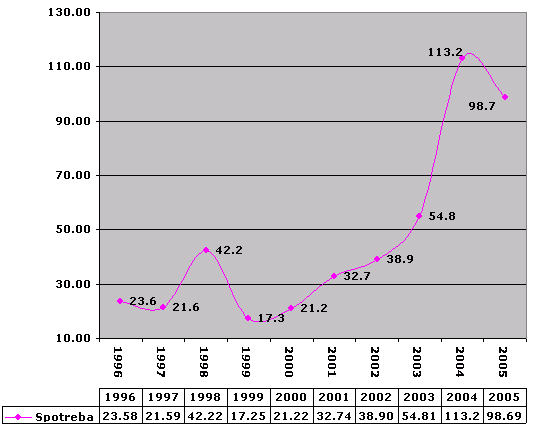
V rokoch 1999/2000 som bol na vojenskej službe, preto zrejme došlo ku poklesu, nárast v roku 1998 vysvetľujem tým, že som bol denne doma. Nárast v rokoch 2001 až dodnes vysvetľujem veľkými nárastmi reklamných a informačných materiálov.


Separate Collection and Energy Consumption

I have been separating waste since around 1995. Since I am interested in how much waste a household can produce, and consume, and under what conditions there are fluctuations, I can evaluate the values ​​I have found.

Collection of paper by years

In the years 1999/2000, I was on military service, so there was probably a decrease. The increase in 1998 is explained by the fact that I was at home every day. The increase from 2001 to the present is explained by significant increases in advertising and informational materials.

Environmentalistika a ja

K 1.1.2006 som vyseparoval 472 kg papiera. / As of January 1, 2006, I separated 472 kg of paper.

Zber plastov

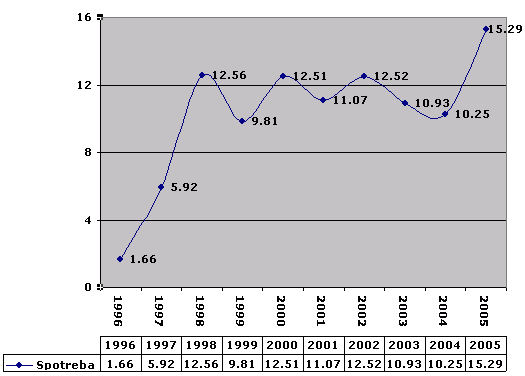
Na začiatku, keď sme začali separovať, veľmi dlho trvalo, kým si na to dostalo do vedomia, svoje zohrala aj ochota a zvyky. Potom, ako možno vidieť z roku 1998 sa situácia stabilizovala.


The separation of plastics was challenging at the beginning, and it took a while for awareness to build. Habits and willingness also played a role. As seen from the data in 1998, the situation stabilized over time.

Environmentalistika a ja

K 1.1.2006 som vyseparoval 105 kg plastov.

Kovy

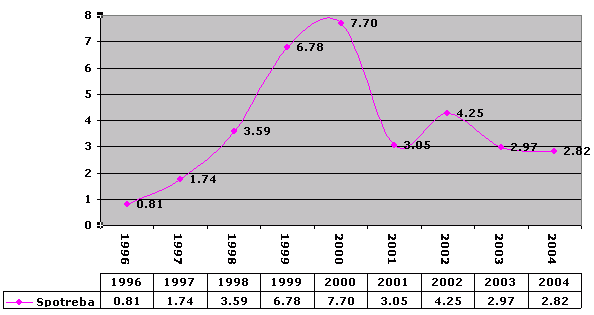
Na príklade kovov je jasne vidieť veľké rozdiely, ktoré som naznačoval vyššie. V rokoch 1999-2000 som bol na ZVS. Konzervová strava sa jasne prejavila – okolo 7 kg na rok.


On January 1, 2006, I separated 105 kg of plastics.

Metals

The example of metals clearly shows significant differences, as I mentioned earlier. In the years 1999-2000, I was in military service, and the use of canned food is evident, contributing to about 7 kg per year.


Environmentalistika a ja

K 1.1.2006 som vyseparoval 46 kg kovov.

Spotreba energie

Evidované obdobie – od roku 1998


On January 1, 2006, I separated 46 kg of metals.

Energy Consumption

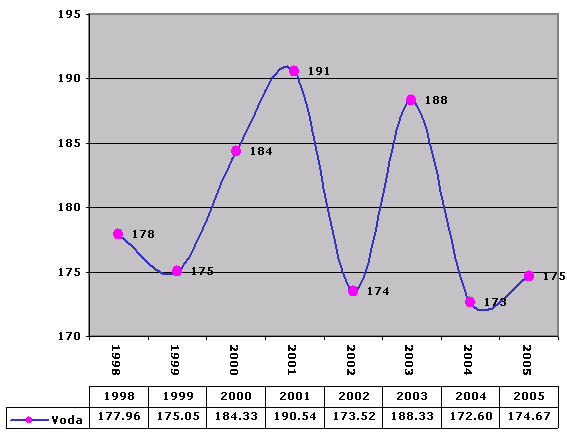
Recorded period – from 1998

Water


Environmentalistika a ja

Spotreba je m3 / The consumption is in cubic meters.

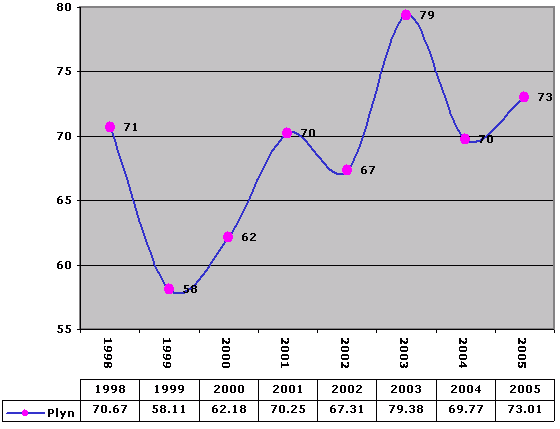
Plyn / Gas

Environmentalistika a ja

Spotreba je m3

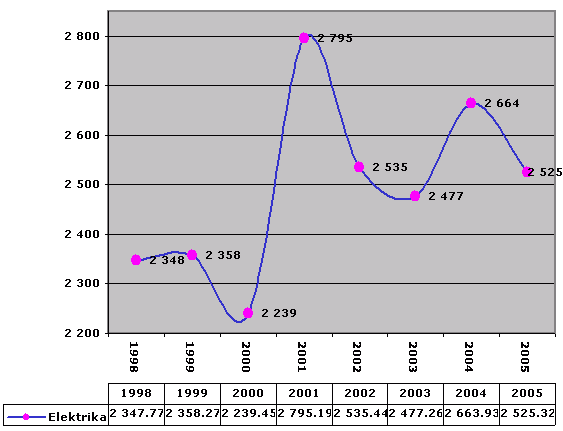
Elektrina

Podľa jednotlivých rokov – v roku 2001 došlo ku výraznejšiemu nárastu – príčina najmä pomerne silné ohrievače – v rokoch 2002, 2003 došlo ku miernemu poklesu – vymenili sme starú chladničku za síce väčšiu a kombinovanú s mrazničkou, ale novú. V roku 2005 sme kúpili novú práčku, v roku 2006 nový sporák.


Electricity

By individual years – in 2001 there was a significant increase – the main cause was relatively powerful heaters – in 2002, 2003 there was a slight decrease – we replaced the old refrigerator with a larger one and combined with a freezer, but new. In 2005, we bought a new washing machine, and in 2006 a new stove.


Environmentalistika a ja

Spotreba je kWh.