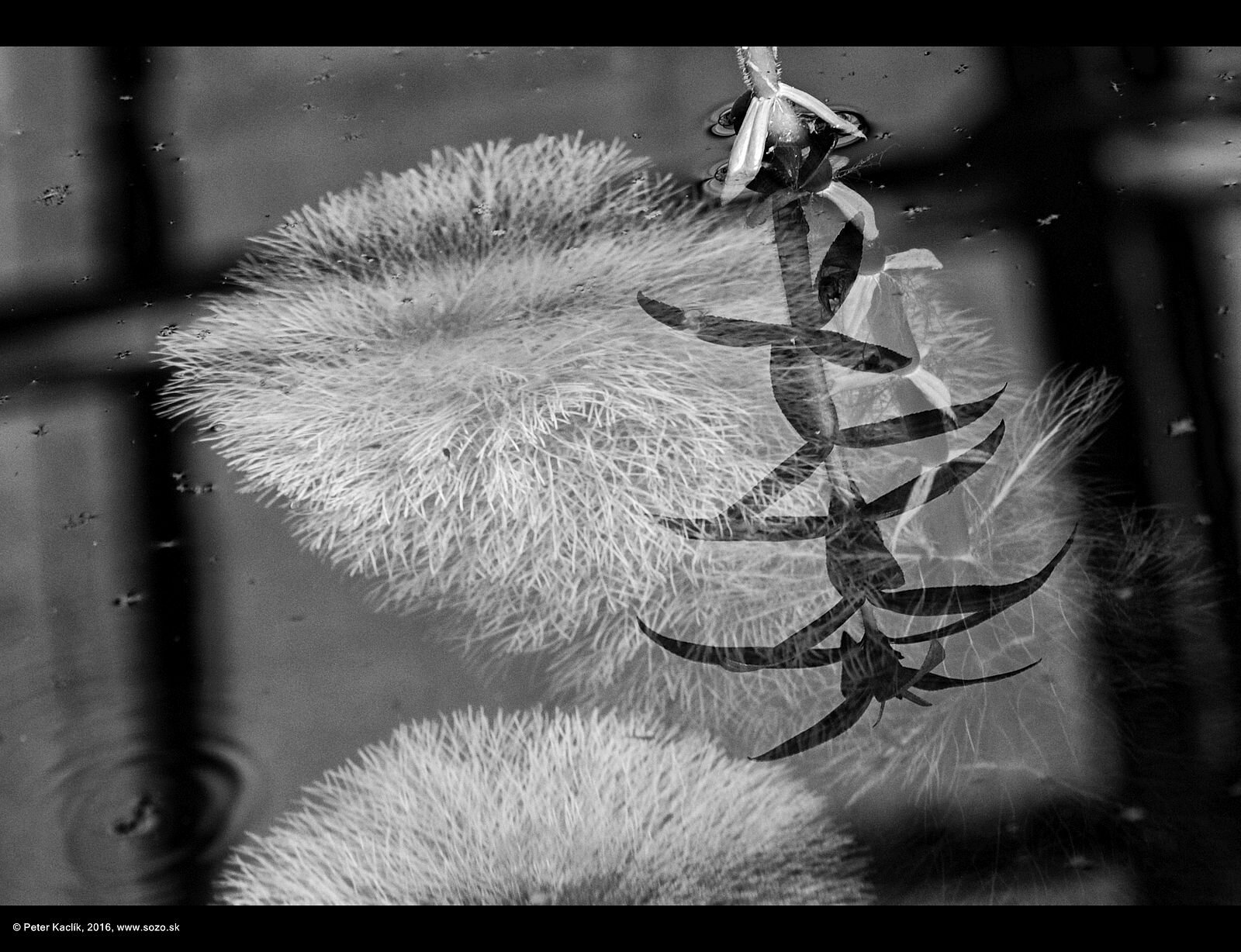
Vodné rastliny sa líšia od suchozemských rastlín, sú adaptované na prostredie pod vodou. Listy vodných rastlín majú prieduchy aj na vrchnej, aj na spodnej strane – takpovediac dýchajú oboma „stranami“ na rozdiel od suchozemských rastlín. Povrch suchozemských rastlín tvorí kutikula, u rastlín vodných takmer u všetkých druhov chýba. Pravdepodobne by najmä bránila difúzii plynov. Plávajúce rastliny obyčajne nezakoreňujú, ani tie, ktoré žijú na hladine. Korene sú čo do tvaru obdobné ako pri suchozemských druhoch. Do dôsledkov nemožno brať za každých okolností vodu ako bariéru, pretože sú vodné rastliny, ktoré aj v prirodzených podmienkach vyrastajú nad hladinu, resp. rastú v močarinách s nízkou hladinou vody vo veľkom vlhku. Aj v akvaristike sa zaužíval pojem submerzná forma a emerzná forma rastliny. Submerzná forma rastie pod hladinou vody, emerzná forma nad hladinou. Jednotlivé formy sa často líšia, okrem iného tvarom, aj farbou. V praxi je v drvivej väčšine používané nepohlavné rozmnožovanie rastlín – odrezkami, poplazmi, výhonkami apod. Submerzná forma môže aj v akváriu vyrásť do emerznej formy – často napr. Echinodorus. Ak je nádrž pre rastlinu príliš nízka, často si nájde cestu von. Avšak aj vodná rastlina kvitne a často veľmi podobne ako suchozemské druhy. Kvet tvorí niekedy pod hladinou, častejšie nad jej povrchom. Pohlavné množenie rastlín nie je vylúčené, ale je problematické a je skôr prácou pre špecialistu. Vodné rastliny sú väčšinou zelené, niekedy červené, fialové, hnedočervené. Existuje množstvo druhov vodných rastlín.
Aquatic plants differ from terrestrial plants; they are adapted to the underwater environment. The leaves of aquatic plants have stomata on both the upper and lower surfaces – they breathe through both „sides,“ unlike terrestrial plants. The surface of terrestrial plants is covered with a cuticle, which is almost absent in almost all species of aquatic plants. It would likely hinder gas diffusion. Floating plants usually do not root, even those that live on the water surface. The roots are similar in shape to those of terrestrial species. The consequences cannot always be taken as a barrier, as there are aquatic plants that grow above the water surface in natural conditions or grow in marshes with low water levels but high humidity. In aquariums, the terms submerged form and emerged form of plants are common. The submerged form grows underwater, while the emerged form grows above the water. The individual forms often differ in shape and color. In practice, vegetative propagation of plants is widely used – by cuttings, runners, shoots, etc. The submerged form can grow into the emerged form in an aquarium – often seen in plants like Echinodorus. If the tank is too low for the plant, it often finds its way out. However, aquatic plants also bloom, often very similar to terrestrial species. The flower sometimes forms below the water surface, more often above it. Sexual reproduction of plants is not excluded but is problematic and is rather a task for a specialist. Aquatic plants are mostly green, sometimes red, purple, or reddish-brown. There are numerous species of aquatic plants.
Wasserpflanzen unterscheiden sich von Landpflanzen; sie sind an die Unterwasserumgebung angepasst. Die Blätter von Wasserpflanzen haben Stomata auf sowohl der oberen als auch der unteren Oberfläche – sie atmen durch beide „Seiten“, im Gegensatz zu Landpflanzen. Die Oberfläche von Landpflanzen ist mit einer Cuticula bedeckt, die bei fast allen Arten von Wasserpflanzen fast nicht vorhanden ist. Sie würde wahrscheinlich die Gasdiffusion behindern. Schwimmende Pflanzen wurzeln normalerweise nicht, auch nicht diejenigen, die auf der Wasseroberfläche leben. Die Wurzeln ähneln in ihrer Form denen terrestrischer Arten. Die Konsequenzen können nicht immer als Barrieren angesehen werden, da es Wasserpflanzen gibt, die in natürlichen Bedingungen über der Wasseroberfläche wachsen oder in Sümpfen mit niedrigem Wasserstand, aber hoher Luftfeuchtigkeit wachsen. In Aquarien sind die Begriffe „submerse Form“ und „emerse Form“ von Pflanzen verbreitet. Die submerse Form wächst unter Wasser, während die emerse Form über dem Wasser wächst. Die einzelnen Formen unterscheiden sich oft in Form und Farbe. In der Praxis wird die vegetative Vermehrung von Pflanzen weit verbreitet – durch Stecklinge, Ausläufer, Triebe usw. Die submerse Form kann sich in die emerse Form in einem Aquarium entwickeln – oft bei Pflanzen wie Echinodorus zu beobachten. Wenn das Becken für die Pflanze zu niedrig ist, findet sie oft einen Weg nach draußen. Wasserpflanzen blühen auch, oft sehr ähnlich wie terrestrische Arten. Die Blume bildet sich manchmal unter der Wasseroberfläche, häufiger darüber. Die sexuelle Vermehrung von Pflanzen ist nicht ausgeschlossen, aber problematisch und eher eine Aufgabe für einen Spezialisten. Wasserpflanzen sind meistens grün, manchmal rot, lila oder rötlich-braun. Es gibt zahlreiche Arten von Wasserpflanzen.
Svetlo je dôležitým faktorom pre rastliny – sú druhy tieňomilné, napr. Microsorium, Vesicularia, druhy svetlomilné, napr. Salvinia, Pistia. Rozdiely sú aj v otázke optimálnej teploty. Sú druhy, ktoré pri relatívne malom rozdiely teploty rastú evidentne inak. Listy sú hustejšie pri sebe v chladnejšej vode, farba listov je tmavšia apod. Väčšina vodných akváriových rastlín má pomerne úzky rozsah teploty, v ktorej žijú. Niektoré akváriové druhy znesú naozaj veľmi nízke teploty, podobné už aj našim studenovodným prírodným podmienkam mierneho pásma. Na rastliny takisto vplýva prúdenie vody. Niektoré druhy sú stavané na stojaté vody, niektoré na rýchlo tečúce toky. V akváriu je zdrojom prúdov vody najmä filter a vzduchovanie. Prúdenie vody značne ovplyvňuje dekorácia, svoju úlohu zohráva aj sklon, reliéf dna. Rovné dno dáva vznik silnejšiemu prúdeniu. Na rastliny veľmi neblaho vplývajú liečivá používané v akvaristike. Ich negatívny účinok je bohužiaľ dlhodobý. Ak máme možnosť, presaďme aspoň časť rastlín do inej nádrže počas liečby. Aj to je dôvod na zriadenie samostatnej karanténnej nádrže. Po použití liečiv je možné použiť aktívne uhlie. Rastliny akvaristi presádzajú. najčastejšie k tomu dochádza pri vegetatívnom rozmnožovaní.
Light is an important factor for plants – there are shade-tolerant species, for example, Microsorium, Vesicularia, and light-loving species, for example, Salvinia, Pistia. Differences also exist in terms of the optimal temperature. There are species that clearly grow differently with relatively small temperature differences. Leaves are denser together in cooler water, and the color of the leaves is darker, etc. Most aquatic aquarium plants have a relatively narrow temperature range in which they live. Some aquarium species can tolerate very low temperatures, similar to the cold-water conditions of our temperate zone. Water flow also affects plants. Some species are adapted to stagnant water, while others prefer fast-flowing streams. In the aquarium, the main sources of water flow are the filter and aeration. Water flow significantly influences decoration, and the slope and relief of the bottom also play a role. A flat bottom creates stronger currents. Medications used in aquaristics have a very negative effect on plants, unfortunately, their negative impact is long-lasting. If possible, transplant at least some of the plants to another tank during treatment. This is also a reason to set up a separate quarantine tank. After using medications, activated carbon can be used. Aquarium enthusiasts often transplant plants, usually during vegetative propagation.
Licht ist ein wichtiger Faktor für Pflanzen – es gibt schattenliebende Arten wie Microsorium, Vesicularia und lichtliebende Arten wie Salvinia, Pistia. Es gibt auch Unterschiede hinsichtlich der optimalen Temperatur. Es gibt Arten, die sich bei relativ geringen Temperaturunterschieden deutlich anders entwickeln. Blätter sind dichter beieinander in kühlerem Wasser, die Farbe der Blätter ist dunkler usw. Die meisten Wasserpflanzen im Aquarium haben einen relativ engen Temperaturbereich, in dem sie leben. Einige Aquarienarten können sehr niedrige Temperaturen tolerieren, ähnlich wie die Kaltwasserbedingungen unserer gemäßigten Zone. Auch der Wasserfluss beeinflusst Pflanzen. Einige Arten sind an stehendes Wasser angepasst, während andere schnell fließende Ströme bevorzugen. Im Aquarium sind die Hauptquellen für Wasserströmung der Filter und die Belüftung. Die Wasserströmung beeinflusst die Dekoration erheblich, und die Neigung und das Relief des Bodens spielen ebenfalls eine Rolle. Ein flacher Boden erzeugt stärkere Strömungen. Medikamente, die in der Aquaristik verwendet werden, haben leider einen sehr negativen Einfluss auf Pflanzen, und ihr negativer Einfluss ist leider langanhaltend. Wenn möglich, verpflanzen Sie während der Behandlung zumindest einige Pflanzen in ein anderes Becken. Dies ist auch ein Grund für die Einrichtung eines separaten Quarantänebeckens. Nach der Anwendung von Medikamenten kann Aktivkohle verwendet werden. Aquarianer transplantieren Pflanzen oft, meist während der vegetativen Vermehrung.
Väčšie materské rastliny neodporúčam často presádzať. Rastliny môžu byť aj zdrojom potravy pre ryby, slimáky apod., čo je však väčšinou nežiaduce. Často sa na elimináciu rias používajú mladé prísavníky. Pokiaľ sú malé svoju úlohu plnia poctivo, no väčšie sa radšej pustia do rastlín. Slimáky dokážu takisto požierať riasy, najmä ak majú nedostatok inej potravy, vedia sa však pustiť aj do rastlín. Najrozšírenejšie ampulárie rastliny nežerú. V akváriu svietime umelým svetlom, dĺžka osvetlenia by mala byť taká ako v ich domovine. Dôležité rovnako je dodržiavať pravidelnosť, 12-14 hodinový interval je nutný. Závisí od umiestnenia, od toho či sme v tmavej miestnosti, aká je dĺžka denného svetla a koľko ho slnko poskytuje. Denné svetlo má inú kvalitu ako umelé svetlo, dá sa mu iba prispôsobiť. Druhy sú prispôsobené rôznemu prostrediu. Vodné rastliny, napokon rovnako ako aj ich suchozemské príbuzné menia svoj metabolizmus v závislosti od striedania dňa a noci. Je to ich vlastný prirodzený biorytmus. Rastliny cez deň prijímajú svetlo, CO2, tvoria organickú hmotu a ako vedľajší produkt tvoria kyslík. Tejto reakcii vravíme fotosyntéza.
I don’t recommend transplanting larger mother plants frequently. Plants can also be a source of food for fish, snails, etc., which is usually undesirable. Young suction snails are often used to eliminate algae. If they are small, they do their job diligently, but larger ones tend to go after the plants instead. Snails can also consume algae, especially if they lack other food, but they can also target plants. The most common apple snails do not eat plants. In the aquarium, we use artificial light, and the length of illumination should be similar to their natural habitat. It’s equally important to maintain regularity; a 12-14 hour interval is necessary. It depends on the placement, whether we are in a dark room, the length of daylight, and how much sunlight is available. Natural light has a different quality than artificial light; it can only be adapted to. Species are adapted to different environments. Water plants, just like their terrestrial relatives, change their metabolism depending on the alternation of day and night. It’s their own natural biorhythm. During the day, plants absorb light, CO2, produce organic matter, and as a by-product, produce oxygen. This process is called photosynthesis.
Größere Mutterpflanzen sollte man nicht häufig umsetzen. Pflanzen können auch eine Nahrungsquelle für Fische, Schnecken usw. sein, was jedoch in der Regel unerwünscht ist. Junge Saugschnecken werden oft zur Beseitigung von Algen eingesetzt. Wenn sie klein sind, erledigen sie ihre Aufgabe gewissenhaft, aber größere gehen lieber an die Pflanzen. Schnecken können auch Algen fressen, besonders wenn ihnen andere Nahrung fehlt, aber sie können auch Pflanzen angreifen. Die am weitesten verbreiteten Apfelschnecken fressen keine Pflanzen. Im Aquarium verwenden wir künstliches Licht, und die Beleuchtungsdauer sollte ähnlich wie in ihrem natürlichen Lebensraum sein. Es ist ebenso wichtig, die Regelmäßigkeit einzuhalten; ein Intervall von 12-14 Stunden ist notwendig. Es hängt von der Platzierung ab, ob wir uns in einem dunklen Raum befinden, wie lang das Tageslicht ist und wie viel Sonnenlicht verfügbar ist. Natürliches Licht hat eine andere Qualität als künstliches Licht; es kann nur angepasst werden. Arten sind an verschiedene Umgebungen angepasst. Wasserpflanzen ändern ebenso wie ihre terrestrischen Verwandten ihren Stoffwechsel je nach Wechsel von Tag und Nacht. Es ist ihr eigener natürlicher Biorhythmus. Tagsüber nehmen Pflanzen Licht, CO2 auf, produzieren organische Substanz und produzieren als Nebenprodukt Sauerstoff. Dieser Prozess wird Photosynthese genannt.
V noci naopak rastliny kyslík prijímajú – rastliny dýchajú a vylučujú do vody CO2. Rastliny však dýchajú aj cez deň, prevláda však príjem CO2. Vplyvom dýchania rastlín v noci – produkcie CO2 sa pH v akváriu zvyšuje. Koncentrácia CO2 stúpa s tvrdosťou vody, teplotou vody a klesá s pH. Medzi základné funkcie rastlín patrí mineralizácia hmoty. Detrit je usadená vrstva odpadu, výkalov rýb, slimákov apod., ktoré je nutné rozložiť. Tento proces, ktorý uskutočňujú mikroorganizmy, najmä baktérie. Rastliny hrajú pritom dôležitú úlohu, pretože niektoré látky dokážu odbúravať aj ony, ale v každom prípade už mineralizované látky sú zdrojom výživy pre ne. Niektoré korene tvoria podobne ako listy (zelené časti rastlín) kyslík, no za normálnych podmienok každá rastlina tvorí malé množstvo kyslíka, ktoré napomáha aeróbnej redukcii hmoty okolo nich. Niektoré druhy dokážu obzvlášť dobre odčerpávať z vody živiny, ktoré sú pre akvaristu žiadané, napr. Riccia fluitans jeeálnym biologickým prostriedkom na zníženie hladiny dusičnanov. Podobnými schopnosťami oplýva Ceratophyllum demersum. Obdobne Anacharis densa efektívne odčerpáva z vody vápnik. Tieto látky rastliny viažu do svojich pletív a začleňujú sa do ich fyziologických pochodov. Vzhľadom na to, že častoe o látky pre nás akvaristov nie príliš vítané, je táto schopnosť cenná.
At night, on the other hand, plants absorb oxygen – plants respire and release CO2 into the water. However, plants also respire during the day, but CO2 uptake prevails. Due to the respiration of plants at night – the production of CO2, the pH in the aquarium increases. The concentration of CO2 rises with water hardness, water temperature, and decreases with pH. One of the basic functions of plants is the mineralization of matter. Detritus is a layer of sediment composed of waste, fish excrement, snails, etc., which needs to be broken down. This process is carried out by microorganisms, especially bacteria. Plants play an important role in this process because they can also break down some substances, but in any case, already mineralized substances are a source of nutrition for them. Some roots, like leaves (green parts of plants), produce oxygen, but under normal conditions, each plant produces a small amount of oxygen that contributes to the aerobic reduction of matter around them. Some species are particularly good at removing nutrients from the water, which are desired by aquarists, e.g., Riccia fluitans is aneal biological agent for reducing nitrate levels. Similarly, Ceratophyllum demersum possesses similar abilities. Likewise, Anacharis densa effectively removes calcium from the water. Plants bind these substances into their tissues and incorporate them into their physiological processes. Since these substances are often unwelcome for us aquarists, this ability is valuable.
Nachts nehmen Pflanzen jedoch Sauerstoff auf – Pflanzen atmen und geben CO2 ins Wasser ab. Pflanzen atmen jedoch auch tagsüber, aber die CO2-Aufnahme überwiegt. Aufgrund der Atmung von Pflanzen in der Nacht – der CO2-Produktion steigt der pH-Wert im Aquarium. Die Konzentration von CO2 steigt mit der Wasserhärte, der Wassertemperatur und sinkt mit dem pH-Wert. Eine der grundlegenden Funktionen von Pflanzen ist die Mineralisierung von Stoffen. Detritus ist eine Schicht aus Sedimenten, die aus Abfällen, Fischausscheidungen, Schnecken usw. besteht und abgebaut werden muss. Dieser Prozess wird von Mikroorganismen, insbesondere Bakterien, durchgeführt. Pflanzen spielen dabei eine wichtige Rolle, da sie auch einige Substanzen abbauen können, aber in jedem Fall bereits mineralisierte Substanzen eine Nahrungsquelle für sie sind. Einige Wurzeln, wie Blätter (grüne Teile von Pflanzen), produzieren Sauerstoff, aber unter normalen Bedingungen produziert jede Pflanze eine kleine Menge Sauerstoff, die zur aeroben Reduktion von Stoffen um sie herum beiträgt. Einige Arten sind besonders gut darin, Nährstoffe aus dem Wasser zu entfernen, die von Aquarianern gewünscht werden, z.B. ist Riccia fluitans eineales biologisches Mittel zur Reduzierung des Nitratgehalts. Ähnlich verhält es sich mit Ceratophyllum demersum. Ebenso entfernt Anacharis densa effektiv Calcium aus dem Wasser. Pflanzen binden diese Substanzen in ihre Gewebe und integrieren sie in ihre physiologischen Prozesse. Da diese Substanzen für uns Aquarianer oft unerwünscht sind, ist diese Fähigkeit wertvoll.
Vplyv filtrovania a najmä vzduchovania na rast rastlín je viac-menej negatívny. Nedá sa to jednoznačne povedať, ale filtrovanie, ktoré čerí hladinu, a teda aj vzduchovanie je pre rast rastlín nežiaduce, preto to nepreháňajme. Udržiavať akvárium celkom bez filtrácie nechajme radšej na špecialistov, ja sám mám niekoľko takých akvárií. Rastliny však môžu meniť aj farbu. Vodné rastliny, ostatne podobne ako ich suchozemské príbuzné, oplývajú vďaka chlorofylu predovšetkým zeleným sfarbením. Avšak aj jeden jedinec môže vykazovať v priebehu ontogenézy zmeny. Fialová farba inak zelených rastlín má príčinu vo veľkom množstve svetla, živín.
The influence of filtration and especially aeration on plant growth is more or less negative. It cannot be said definitively, but filtration that draws from the surface, and thus aeration as well, is undesirable for plant growth, so let’s not overdo it. Let’s leave the task of keeping an aquarium completely without filtration to the specialists; I myself have several such aquariums. However, plants can also change color. Aquatic plants, much like their terrestrial relatives, primarily exhibit green coloration due to chlorophyll. However, even an individual can undergo changes during ontogeny. The purple color of otherwise green plants is due to a large amount of light and nutrients.
Der Einfluss von Filtration und insbesondere Belüftung auf das Pflanzenwachstum ist mehr oder weniger negativ. Es lässt sich nicht eindeutig sagen, aber Filtration, die von der Oberfläche absaugt, und somit auch Belüftung, sind für das Pflanzenwachstum unerwünscht, daher sollten wir es nicht übertreiben. Das Halten eines Aquariums komplett ohne Filtration sollten wir lieber den Fachleuten überlassen; Ich selbst habe mehrere solcher Aquarien. Pflanzen können jedoch auch ihre Farbe ändern. Wasserpflanzen, ähnlich wie ihre terrestrischen Verwandten, zeigen vor allem durch Chlorophyll eine grüne Färbung. Einzelne Exemplare können jedoch während der Ontogenese Veränderungen aufweisen. Die violette Farbe ansonsten grüner Pflanzen ist auf eine große Menge Licht und Nährstoffe zurückzuführen.
Sadenie rastlín
V prvom rade by sme mali dodržať, že veľké jedince (druhy) sadíme dozadu a menšie dopredu. Vyvarujme sa tiež sadeniu presne do stredu nádrže. Rovnako s citom narábajme so symetriou. Korene skrátime ostrými nožničkami na 1 – 2 cm (nie u rodu Anubias, Cryptocoryne) a pri sadení sa vyvarujme ich poškodeniu. Všetky korene by mali byť v dne, žiadne trčiace korene nie sú žiaduce. Pri niektorý rastlinách, ktoré majú koreňový systém dobre vyvinutý, napr. Echinodorus, zasadenú rastlinu po zasadení mierne povytiahneme – koreňový krčok by mal trošku vyčnievať. V prípade odrezkov je vhodné, aby sme zasadili rastlinu tak, aby sme nesadili holú stonku, ale aby doslova spodné listy boli zafixované do dna. Vodná rastliny tak získa oporu, bude mať oveľa lepšiu stavbu. Plávajúce rastliny hladiny Limnobium, Pistia, Riccia, Salvinia voľne pokladáme na hladinu, iné plávajúce rastliny voľne hodíme do vody. Niektoré z nich sú schopné zakoreniť, avšak nie dlhodobo. Riccia napr. sa dá celkom efektne použiť ako koberec na dno. Keďže sama ma tendenciu vyplávať na hladinu, je nutné ju nejako zachytiť – napr. o ploché kamene. Microsorium, Anubias sa pripevňujú ku drevu, na filter. Najvhodnejšia na to je spletaná šnúra z rybárskeho obchodu. Ak kúpime rastliny v obchode, pravdepodobne budú zasadené v košíkoch a v minerálnej vate. Tieto sa do akvária nehodia, najmä nie skalná vata, preto vodné rastliny vyberieme z košíkov a zbavíme ich predovšetkým minerálnej vaty. Výživa rastlín, hnojenie Rastliny sa získavajú energiu viacerými spôsobmi. Ich prirodzeným zdrojom energie je CO2 – oxid uhličitý a svetlo. Stačí si spomenúť na fotosyntézu zo školy. Ak majú rastliny dostatok CO2, nedokážu ho zužitkovať pri nedostatku svetla. Ak rastliny majú dostatok svetla, pri deficite CO2 ho nedokážu dostatočne využiť. Ak však sú obe hodnoty optimálne, je to veľký predpoklad pre veľmi úspešný rast našich rastlín. V poradí dôležitosti by som svetlo postavil pred CO2. Pre úspešný rast rastlín treba kvalitné osvetlenie.
Planting of plants
First of all, we should keep in mind that large specimens (species) should be planted in the back and smaller ones in the front. Also, let’s avoid planting exactly in the center of the tank. Likewise, handle symmetry with care. Trim the roots with sharp scissors to 1-2 cm (not for the genus Anubias, Cryptocoryne), and when planting, avoid damaging them. All roots should be in the substrate; no exposed roots are desirable. For some plants with a well-developed root system, such as Echinodorus, gently lift the planted plant after planting – the root collar should protrude slightly. In the case of cuttings, it is advisable to plant the plant so that we do not plant a bare stem, but so that the lower leaves are literally fixed into the substrate. Water plants will thus gain support and have a much better structure. Floating plants such as Limnobium, Pistia, Riccia, Salvinia are freely placed on the surface, while other floating plants are simply dropped into the water. Some of them are capable of rooting, but not long-term. For example, Riccia can be quite effectively used as a carpet on the bottom. Since it tends to float to the surface, it is necessary to somehow anchor it – for example, with flat stones. Microsorium, Anubias are attached to wood, to the filter. The most suitable for this is a braided string from a fishing shop. If we buy plants in a store, they will probably be planted in baskets and mineral wool. These are not suitable for the aquarium, especially not rock wool, so we remove water plants from the baskets and remove them from mineral wool. Plants obtain energy in several ways. Their natural source of energy is CO2 – carbon dioxide and light. Just remember photosynthesis from school. If plants have enough CO2, they cannot utilize it in the absence of light. If plants have enough light, in the absence of CO2, they cannot utilize it sufficiently. However, if both values are optimal, it is a great prerequisite for the very successful growth of our plants. In terms of importance, I would place light before CO2. Quality lighting is essential for successful plant growth.
Pflanzung von Pflanzen
Zunächst sollten wir beachten, dass große Exemplare (Arten) hinten und kleinere vorne gepflanzt werden sollten. Vermeiden wir auch das Pflanzen genau in die Mitte des Tanks. Gehen wir auch mit Symmetrie sorgsam um. Schneiden Sie die Wurzeln mit scharfen Scheren auf 1-2 cm (nicht für die Gattung Anubias, Cryptocoryne), und beim Pflanzen vermeiden Sie es, sie zu beschädigen. Alle Wurzeln sollten im Substrat sein; keine freiliegenden Wurzeln sind erwünscht. Für einige Pflanzen mit gut entwickeltem Wurzelsystem, wie Echinodorus, heben Sie die gepflanzte Pflanze nach dem Pflanzen vorsichtig an – der Wurzelkragen sollte leicht herausragen. Im Fall von Stecklingen ist es ratsam, die Pflanze so zu pflanzen, dass wir keinen nackten Stängel pflanzen, sondern dass die unteren Blätter buchstäblich ins Substrat eingebettet sind. Wasserpflanzen gewinnen so Unterstützung und haben eine viel bessere Struktur. Schwimmende Pflanzen wie Limnobium, Pistia, Riccia, Salvinia werden frei auf die Oberfläche gelegt, während andere Schwimmpflanzen einfach ins Wasser geworfen werden. Einige von ihnen sind in der Lage zu wurzeln, aber nicht langfristig. Zum Beispiel kann Riccia recht effektiv als Teppich auf dem Boden verwendet werden. Da es dazu neigt, an die Oberfläche zu steigen, ist es notwendig, es irgendwie zu verankern – zum Beispiel mit flachen Steinen. Microsorium, Anubias werden an Holz, an den Filter befestigt. Am besten geeignet dafür ist ein geflochtener Faden aus einem Angelgeschäft. Wenn wir Pflanzen im Laden kaufen, werden sie wahrscheinlich in Körben und Mineralwolle gepflanzt sein. Diese sind für das Aquarium nicht geeignet, insbesondere keine Steinwolle, also nehmen wir Wasserpflanzen aus den Körben und entfernen sie von Mineralwolle. Pflanzen erhalten Energie auf verschiedene Arten. Ihre natürliche Energiequelle ist CO2 – Kohlendioxid und Licht. Erinnern Sie sich einfach an die Photosynthese aus der Schule. Wenn Pflanzen genügend CO2 haben, können sie es im Fehlen von Licht nicht nutzen. Wenn Pflanzen genügend Licht haben, können sie es im Fehlen von CO2 nicht ausreichend nutzen. Wenn jedoch beide Werte optimal sind, ist dies eine großartige Voraussetzung für das sehr erfolgreiche Wachstum unserer Pflanzen. Ich würde Licht vor CO2 als wichtig einstufen. Eine qualitativ hochwertige Beleuchtung ist entscheidend für das erfolgreiche Pflanzenwachstum.
V prípade, že vidíme produkciu kyslíka rastlinami – tvoriace sa bublinky čerstvého kyslíka, koncentrácia kyslíka v bunke stúpla nad 40 mg/l. Pre úspešnejší rast rastlín je veľa krát vhodné siahnuť po doplnení výživy. Ku zvýšenému prijímaniu živín – energie prispieva aj prúdenie vody. Výživu rastliny dostávajú aj vo forme odpadných látok – výkalov rýb. Aj nádrže tzv. holandského typu (rastlinné) často krát obsahujú nejaké ryby, ktoré slúžia práve na neustále obohacovanie živinami. V tomto prípade skôr tými stopovými. V prípade, že sa vo vode nachádza nedostatok CO2 a rastliny dokážu z hydrogenuhličitanov tento získať, môže dôjsť ku biogénnemu odvápneniu – vyzrážanie nerozpustného uhličitanu vápenatého na povrchu listov. Prijímanie hydrogenuhličitanov je však energeticky náročnejšie. Akvárium má často dostatok živín vo forme exkrementov rýb. Humínové kyseliny sú látky, ktoré sa najmä v prírode bežne nachádzajú vo vode. Sú to produkty látkovej premeny dreva, pôdy, listov, častí rastlín. Z hľadiska využitia pre akvaristiku je zaujímavé použitie dreva a listov, prípadne šišiek, škrupín orechov apod. Sú nesmierne dôležité pre rastliny, pretože dokážu byť energetickým mostom medzi zdrojom výživy a rastlinou. Vďaka týmto organickým komplexom dokáže rastlina získať to, čo je príroda ponúka. Je to podobná funkcia ako majú bioflavonoidy pre vitamín C. Darmo budeme prijímať megadávky vitamínov ak ich telo nedokáže zužitkovať. Humínové kyseliny sa tvoria v prírode v pôde. Železo vo vode za normálnych podmienok veľmi rýchlo oxiduje na formu nevyužiteľnú pre rastliny.
If we observe oxygen production by plants – the formation of bubbles of fresh oxygen, the concentration of oxygen in the cell has risen above 40 mg/l. For more successful plant growth, it is often advisable to supplement nutrients. Increased nutrient uptake – energy is also contributed by water flow. Plants also receive nutrients in the form of waste materials – fish excrement. Even tanks of the so-called Dutch type (planted) often contain some fish, which serve to constantly enrich the nutrients. In this case, more with trace elements. If there is a lack of CO2 in the water and plants are able to obtain it from bicarbonates, biogenic decalcification can occur – the precipitation of insoluble calcium carbonate on the surface of leaves. However, the uptake of bicarbonates is more energy-intensive. Aquariums often have enough nutrients in the form of fish excrement. Humic acids are substances that are commonly found in water in nature. They are products of the transformation of wood, soil, leaves, plant parts. From the point of view of use for aquaristics, the use of wood and leaves, or cones, nut shells, etc., is interesting. They are extremely important for plants because they can be an energy bridge between a source of nutrition and a plant. Thanks to these organic complexes, the plant can obtain what nature offers. It’s a similar function to what bioflavonoids have for vitamin C. It’s useless to take megadoses of vitamins if the body can’t utilize them. Humic acids are formed naturally in the soil. Iron in water under normal conditions oxidizes very quickly into a form unusable for plants.
Wenn wir die Sauerstoffproduktion durch Pflanzen beobachten – die Bildung von Blasen frischen Sauerstoffs -, ist die Konzentration von Sauerstoff in der Zelle auf über 40 mg/l gestiegen. Für ein erfolgreicheres Pflanzenwachstum ist es oft ratsam, Nährstoffe zu ergänzen. Eine erhöhte Nährstoffaufnahme – Energie wird auch durch den Wasserfluss beigetragen. Pflanzen erhalten auch Nährstoffe in Form von Abfallmaterialien – Fischausscheidungen. Selbst Becken des sogenannten holländischen Typs (bepflanzt) enthalten oft einige Fische, die dazu dienen, die Nährstoffe ständig anzureichern. In diesem Fall eher mit Spurenelementen. Wenn es im Wasser an CO2 mangelt und Pflanzen es aus Hydrogencarbonaten gewinnen können, kann es zu biogenem Entkalken kommen – der Ausfällung von unlöslichem Calciumcarbonat auf der Oberfläche der Blätter. Die Aufnahme von Hydrogencarbonaten ist jedoch energieaufwendiger. Aquarien haben oft genug Nährstoffe in Form von Fischausscheidungen. Huminsäuren sind Substanzen, die in der Natur im Wasser häufig vorkommen. Sie sind Produkte der Umwandlung von Holz, Boden, Blättern, Pflanzenteilen. Vom Standpunkt der Verwendung für die Aquaristik ist die Verwendung von Holz und Blättern oder Kegeln, Nussschalen usw. interessant. Sie sind äußerst wichtig für Pflanzen, weil sie eine Energiebrücke zwischen einer Nahrungsquelle und einer Pflanze sein können. Dank dieser organischen Komplexe kann die Pflanze das bekommen, was die Natur bietet. Es ist eine ähnliche Funktion wie die von Bioflavonoiden für Vitamin C. Es ist sinnlos, Megadosen von Vitaminen einzunehmen, wenn der Körper sie nicht nutzen kann. Huminsäuren entstehen natürlich im Boden. Eisen im Wasser oxidiert unter normalen Bedingungen sehr schnell in eine Form, die für Pflanzen unbrauchbar ist.
Filter je doslova požierač železa. Ak sa však viaže v chelátoch, v organických komplexoch, je prístupné rastlinám.e o Fe2+, aj Fe3+, a práve humínové kyseliny sú substrátom, v ktorom sa môže železo uplatniť pre rastliny. Nedostatok železa spôsobuje chlorózu, ktorá sa prejavuje slabým pletivom – sklovitými listami, žltnutím najmä od okrajov podobne ako aj u suchozemských rastlín. Minerály a stopové látky sú získavané prirodzenou cestou z vody a z detritu. Stopové látky sú látky, prvky, ktoré nie sú nevyhnutné vo veľkom množstve, ale iba v nízkych (stopových) koncentráciách – napr. Zn, Mn, K, Cu. Niektoré z týchto prvkov sú vo vyšších koncentráciách škodlivé až jedovaté. Detrit je hmota, tvorená mikroorganizmami organickou hmotou odumretých rastlín, výkalov rýb apod. V prípade rastlinného akvária je často kameňom úrazu práve obsah minerálnych látok. Najlepší spôsob ako toho dosiahnuť sú ryby. Mikroorganizmy – najmä nitrifikačné a denitrifikačné baktérie rozkladajú hmotu na látky využiteľné rastlinami. Rastliny tento zdroj energie využívajú najmä pomocou koreňov. Niektoré sú schopné viazať viac NO3 – dusičnanov napr. Ceratophyllum demersum, Riccia fluitans. Veľa z nás má zdrojovú vodu obsahujúcu vysoké množstvo dusičnanov. Norma pitnej vody o maximálnej hodnote je dosť vysoká pre akvaristiku, nevhodné najmä pre nové akvárium. Vďaka pomerne vysokému obsahu dusíka potom môže ľahšie dôjsť ku tvorbe toxického amoniaku.
The filter is literally an iron eater. However, when it binds in chelates, in organic complexes, it becomes accessible to plants. This includes Fe2+ and Fe3+, and it is precisely humic acids that serve as a substrate where iron can be utilized by plants. Iron deficiency causes chlorosis, characterized by weak tissues – glassy leaves, yellowing especially from the edges, similar to terrestrial plants. Minerals and trace elements are obtained naturally from water and detritus. Trace elements are substances, elements that are not essential in large quantities, but only in low (trace) concentrations – e.g., Zn, Mn, K, Cu. Some of these elements can be harmful or even toxic in higher concentrations. Detritus is matter composed of organic matter from dead plants, fish excrement, etc. In the case of a planted aquarium, the mineral content is often the stumbling block. The best way to achieve this is through fish. Microorganisms – especially nitrifying and denitrifying bacteria – break down matter into substances that plants can use. Plants primarily utilize this energy source through their roots. Some are capable of binding more NO3 – nitrates, for example, Ceratophyllum demersum, Riccia fluitans. Many of us have source water containing high levels of nitrates. The maximum value in drinking water standards is quite high for aquariums, especially unsuitable for new ones. Due to the relatively high nitrogen content, it can lead more easily to the formation of toxic ammonia.
Der Filter ist buchstäblich ein Eisenfresser. Wenn es jedoch in Chelaten, in organischen Komplexen gebunden ist, wird es für Pflanzen zugänglich. Dies umfasst Fe2+ und Fe3+, und genau Huminsäuren dienen als Substrat, auf dem Eisen von Pflanzen genutzt werden kann. Eisenmangel führt zu Chlorose, gekennzeichnet durch schwache Gewebe – glasige Blätter, Vergilbung besonders an den Rändern, ähnlich wie bei terrestrischen Pflanzen. Mineralien und Spurenelemente werden auf natürliche Weise aus Wasser und Detritus gewonnen. Spurenelemente sind Substanzen, Elemente, die nicht in großen Mengen, sondern nur in niedrigen (Spuren-)Konzentrationen notwendig sind – z. B. Zn, Mn, K, Cu. Einige dieser Elemente können in höheren Konzentrationen schädlich oder sogar giftig sein. Detritus besteht aus organischem Material aus abgestorbenen Pflanzen, Fischausscheidungen usw. Im Falle eines bepflanzten Aquariums ist der Mineralgehalt oft der Stolperstein. Der beste Weg, dies zu erreichen, sind Fische. Mikroorganismen – insbesondere nitrifizierende und denitrifizierende Bakterien – zersetzen Materie in Substanzen, die Pflanzen nutzen können. Pflanzen nutzen diese Energiequelle hauptsächlich über ihre Wurzeln. Einige sind in der Lage, mehr NO3 – Nitrate zu binden, zum Beispiel Ceratophyllum demersum, Riccia fluitans. Viele von uns haben Quellwasser mit hohen Nitratgehalten. Der Höchstwert in den Trinkwasserstandards ist für Aquarien recht hoch, besonders ungeeignet für neue. Aufgrund des relativ hohen Stickstoffgehalts kann es leichter zur Bildung von giftigem Ammoniak führen.
Cyklus dusíka trvá niečo vyše mesiaca, takže dusičnanový anión pridaný dnes putuje ekosystémom akvária viac ako mesiac, kým ho opustí. Denitrifikačné a nitrifikačné procesy sú pomerne zložité, zaujímavé aj pre laika je snáď fakt, že sa ako produkt týchto reakcií tvorí aj plynný dusík N2. Ten samozrejme uniká do atmosféry – von z nádrže. Denitrifikačné baktérie sa nachádzajú vo filtri. Tak ako píšem v článku o filtrovaní, je nevhodné filtračné vložky podrobovať tečúcej vode z bežného vodovodu. Preto, aby sme nezabili naše rozvinuté baktérie je vhodnejšie umývať molitan vo vode neobsahujúcej chlór a ostatné plyny používané vo vodovodnej sieti. Na trhu existujúce produkty, ktoré obsahujú baktérie, ktoré sa pridávajú do filtra. Na trhu sú dostupné rôzne produkty hnojív a výživových doplnkov pre rastliny. Neodporúča sa kombinovať hnojivá ani rôznych firiem ani výrobkov jednej firmy. Mechanicky zachytené časti z filtra používam ako hnojivo aj do kvetináčov suchozemských rastlín. Filter ako oxidant obyčajne obsahuje množstvo látok, hodnotné je najmä železo, ktoré je balzamom pre často chudobné pôdy v črepníkoch. Táto hmota, je okrem toho takpovediac natrávená, takže sa v pôde pomerne rýchlo rozkladá.
The nitrogen cycle takes a little over a month, so the nitrate anion added today travels through the aquarium ecosystem for more than a month before it leaves. Denitrification and nitrification processes are quite complex. An interesting fact even for a layperson is that gaseous nitrogen N2 is also produced as a product of these reactions. This nitrogen naturally escapes into the atmosphere – out of the tank. Denitrifying bacteria are found in the filter. As I wrote in the article about filtration, it is not suitable to subject filter media to flowing water from the regular water supply. Therefore, to avoid killing our established bacteria, it is better to wash the foam in water without chlorine and other gases used in the water supply system. There are products available on the market containing bacteria that are added to the filter. Various fertilizer products and nutritional supplements for plants are available on the market. It is not recommended to combine fertilizers from different companies or products from one company. I use mechanically trapped particles from the filter as fertilizer for potted terrestrial plants. The filter, as an oxidant, usually contains a lot of substances, with iron being particularly valuable, which acts as a balm for often nutrient-poor soils in pots. This material is, moreover, so to speak, digested, so it decomposes relatively quickly in the soil.
Der Stickstoffkreislauf dauert etwas mehr als einen Monat, sodass das heute zugegebene Nitrat-Anion mehr als einen Monat lang durch das Aquarium-Ökosystem wandert, bevor es es verlässt. Die Prozesse der Denitrifikation und Nitrifikation sind ziemlich komplex. Eine interessante Tatsache auch für Laien ist, dass als Produkt dieser Reaktionen auch gasförmiger Stickstoff N2 entsteht. Dieser Stickstoff entweicht natürlich in die Atmosphäre – aus dem Becken heraus. Denitrifizierende Bakterien befinden sich im Filter. Wie ich in dem Artikel über die Filtration schrieb, ist es nicht ratsam, Filtermedien dem fließenden Wasser aus der normalen Wasserversorgung auszusetzen. Daher ist es besser, um unsere etablierten Bakterien nicht zu töten, den Schwamm in Wasser ohne Chlor und andere Gase, die im Wasserversorgungssystem verwendet werden, zu waschen. Es gibt Produkte auf dem Markt, die Bakterien enthalten, die dem Filter zugesetzt werden. Auf dem Markt sind verschiedene Düngerprodukte und Nahrungsergänzungsmittel für Pflanzen erhältlich. Es wird nicht empfohlen, Dünger verschiedener Unternehmen oder Produkte eines Unternehmens zu kombinieren. Ich verwende mechanisch eingefangene Partikel aus dem Filter als Dünger für Topfpflanzen. Der Filter enthält als Oxidationsmittel in der Regel viele Substanzen, wobei Eisen besonders wertvoll ist, das als Balsam für oft nährstoffarme Böden in Töpfen wirkt. Dieses Material wird außerdem sozusagen verdaut, sodass es sich im Boden relativ schnell zersetzt.
Rašelina znižuje pH aj tvrdosť vody, vode poskytuje humínové kyseliny a iné organické látky. PMDD je svetovo veľmi rozšírené takpovediac nekomerčné hnojivo. Mieša sa zo síranu draselného, heptahydrátu síranu horečnatého, dusičnanu draselného a stopových látok: B, Ca, Cu, Fe, Mn, Mo, Zn, ktoré sú vo forme organického komplexu. Je to vhodná kombinácia, v ktorej sú stopové látky asi najdôležitejšie. CO2 ne pridávam pomocou známeho procesu kvasenia. Stačí však na to fľaša, do ktorej nalejeme takmer po vrch vodu, pridáme droždie (kvasnice) a cukor. Vodu na začiatok odporúčam teplejšiu (okolo 35 °C). Fľašu uzatvorím vrchnákom, v ktorom mám otvor pre hadičku, ktorá na druhom konci končí v akváriu, kde je zakončená vzduchovacím kameňom, alebo lipovým drievkom. Použiť sa dá úspešne aj cigaretový filter. Prípadne hadička končí v akváriovom filtri, cez ktorý sa rozstrekuje do vody. Takýto dávkovač CO2 dokáže produkovať 3 – 5 týždňov oxid uhličitý. Má to však chybu v tom, že nie je ošetrený proti náhlemu vzostupu produkcie CO2. V noci je lepšie CO2 takto do nádrže nepumpovať. Na produkciu CO2 sa hodia aj bombičky z fľaše na výrobu sódy. Na trhu existujú rôzne difúzery CO2. Ja používam CO2 fľašu, na ktorej je redukčný ventil a „ihlový“ (bicyklový) ventil, z ktoréhoe hadička do kanistra v akváriu. Funguje to tak, voda si „vypýta“ toľko CO2, koľko „potrebuje“. Tak dosiahnem maximálne rozumné nasýtenie akvária oxidom uhličitým. Redukčný ventil je nato, aby znížil tlak na 5 atmosfér. Ihlový ventil vo všeobecnosti je na to, aby tlak znížil na mieru vhodnú do obyčajnej tenkej akvaristickej hadičky. Existujú aj normálne ihlové ventily, ja však používam ventil, ktorý používajú cyklisti na hustenie pneumatík. Nestojí ani 10 €. Redukčné ventily existujú rôzne, sú aj také, ktoré na výstupe ponúkajú tlak CO2, ktorý môže ísť rovno do nádrže. Kombinovať sa dá pomocou elektromagnetických ventilov, ktoré by sa otvoril podľa spínača. Ja si to riadim tak, že CO2 napustím vždy ráno. Neodporúčam sýtiť akvárium sústavne, tlačiť do vody oxid uhličitý cez otvorené ventily napr. cez rozstrekovanie pomocou filtra. V každom prípade, či už pri zakúpení komerčného produktu, alebo vlastného riešenia, treba mať na zreteli, že difúzia plynov vo vode je rádovo 4 krát nižšia ako vo vzduchu. Čiže podobne ako kyslík, aj CO2 je prijaté vo vyššom množstve za predpokladu tvorby menších bubliniek. Henryho zákon hovorí, že koncentrácia rozpusteného plynu je priamo úmerná parciálnemu tlaku plynu nad jej hladinou – je to v podstate analógia ku osmotickým javom.
Peat reduces the pH and water hardness, providing humic acids and other organic substances to the water. PMDD is a widely used non-commercial fertilizer. It is mixed from potassium sulfate, magnesium sulfate heptahydrate, potassium nitrate, and trace elements: B, Ca, Cu, Fe, Mn, Mo, Zn, which are in the form of organic complexes. It is a suitable combination in which trace elements are probably the most important. I don’t add CO2 using the well-known fermentation process. However, a bottle is enough for this purpose, into which we pour water almost to the top, add yeast and sugar. I recommend starting with warmer water (around 35 °C). I seal the bottle with a stopper, in which I have a hole for a tube, which ends in the aquarium with an air stone or a lime wood piece. A cigarette filter can also be successfully used. Alternatively, the tube ends in the aquarium filter, through which it sprays into the water. Such a CO2 dispenser can produce carbon dioxide for 3 – 5 weeks. However, it has a flaw in that it is not protected against a sudden increase in CO2 production. It’s better not to pump CO2 into the tank at night. CO2 cylinders for making soda can also be used for CO2 production. There are various CO2 diffusers available on the market. I use a CO2 cylinder with a pressure regulator and a „needle“ (bicycle) valve, from which a tube goes into the canister in the aquarium. It works so that the water „requests“ as much CO2 as it „needs“. This way, I achieve a maximally reasonable saturation of the aquarium with carbon dioxide. The pressure regulator is there to reduce the pressure to 5 atmospheres. The needle valve, in general, reduces the pressure to a suitable level for a regular thin aquarium hose. There are also normal needle valves, but I use a valve that cyclists use to inflate tires. It costs less than 10 €. There are various pressure regulators available; some offer CO2 pressure at the output, which can go straight into the tank. It can be combined using solenoid valves, which would open according to a switch. I manage it so that I always inject CO2 in the morning. I do not recommend constantly saturating the aquarium, pushing carbon dioxide into the water through open valves, for example, through spraying using a filter. In any case, whether purchasing a commercial product or a DIY solution, it should be borne in mind that gas diffusion in water is about 4 times lower than in air. So, similarly to oxygen, CO2 is absorbed in larger quantities assuming the formation of smaller bubbles. Henry’s law states that the concentration of dissolved gas is directly proportional to the partial pressure of the gas above its surface – it is essentially analogous to osmotic phenomena.
Torf senkt den pH-Wert und die Wasserhärte und liefert dem Wasser Huminsäuren und andere organische Substanzen. PMDD ist ein weit verbreiteter nicht kommerzieller Dünger. Er wird aus Kaliumsulfat, Magnesiumsulfat-Heptahydrat, Kaliumnitrat und Spurenelementen wie B, Ca, Cu, Fe, Mn, Mo, Zn gemischt, die in Form organischer Komplexe vorliegen. Es handelt sich um eine geeignete Kombination, bei der Spurenelemente wahrscheinlich am wichtigsten sind. Ich füge kein CO2 nach dem bekannten Gärungsprozess hinzu. Es reicht jedoch eine Flasche, in die wir fast bis zum Rand Wasser gießen, Hefe und Zucker hinzufügen. Ich empfehle, zu Beginn warmes Wasser zu verwenden (etwa 35 °C). Ich verschließe die Flasche mit einem Stopfen, in den ich ein Loch für einen Schlauch habe, der im Aquarium mit einem Luftsprudler oder einem Kalkholzstück endet. Auch ein Zigarettenfilter kann erfolgreich verwendet werden. Alternativ endet der Schlauch im Aquariumfilter, durch den er in das Wasser sprüht. Ein solcher CO2-Spender kann Kohlendioxid für 3 – 5 Wochen produzieren. Es hat jedoch den Fehler, dass es nicht gegen einen plötzlichen Anstieg der CO2-Produktion geschützt ist. Es ist besser, nachts kein CO2 in den Tank zu pumpen. CO2-Zylinder zur Herstellung von Soda können ebenfalls zur CO2-Produktion verwendet werden. Auf dem Markt gibt es verschiedene CO2-Diffusoren. Ich verwende einen CO2-Zylinder mit Druckregler und einem „Nadel“ (Fahrrad)-Ventil, von dem aus ein Schlauch in den Behälter im Aquarium führt. Es funktioniert so, dass das Wasser so viel CO2 „anfragt“, wie es „benötigt“. Auf diese Weise erreiche ich eine maximal vernünftige Sättigung des Aquariums mit Kohlendioxid. Der Druckregler ist dafür da, den Druck auf 5 Atmosphären zu reduzieren. Das Nadelventil reduziert den Druck im Allgemeinen auf ein für einen normalen dünnen Aquarienschlauch geeignetes Niveau. Es gibt auch normale Nadelventile, aber ich verwende ein Ventil, das von Radfahrern zum Aufpumpen von Reifen verwendet wird. Es kostet weniger als 10 €. Es gibt verschiedene Druckregler erhältlich; einige bieten CO2-Druck am Ausgang an, der direkt in den Tank geleitet werden kann. Es kann mit Hilfe von Magnetspulenventilen kombiniert werden, die sich entsprechend einem Schalter öffnen würden. Ich steuere es so, dass ich immer morgens CO2 einspritze. Ich empfehle nicht, das Aquarium ständig zu sättigen, indem man Kohlendioxid durch offene Ventile in das Wasser pumpt, beispielsweise durch Sprühen mit einem Filter. Auf jeden Fall, ob Sie ein kommerzielles Produkt kaufen oder eine DIY-Lösung verwenden, sollte beachtet werden, dass die Gasdiffusion im Wasser etwa 4-mal geringer ist als in der Luft. Also wird, ähnlich wie bei Sauerstoff, CO2 in größeren Mengen aufgenommen, vorausgesetzt, es entstehen kleinere Blasen. Das Henrysche Gesetz besagt, dass die Konzentration des gelösten Gases direkt proportional zum Partialdruck des Gases über seiner Oberfläche ist – es ist im Wesentlichen analog zu osmotischen Phänomenen.