Podunajské reportáže, Divadlo, Fotografie, Ľudia, Podujatia, Reportáže, Reportáže zo Slovenska, Umenie, Vystúpenia, Zábavné reportáže

Záleská divadelná púť

Hits: 2790

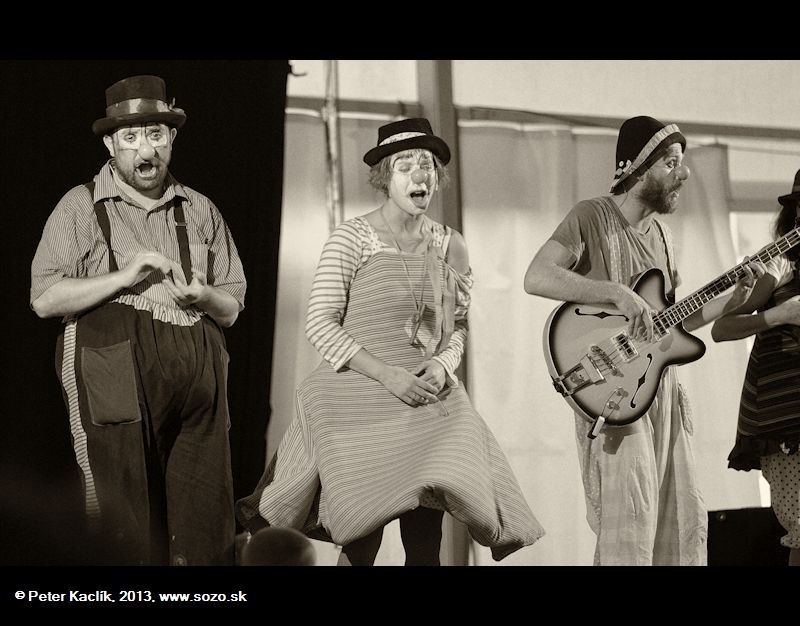
Prvý ročník sa konal v roku 2011, hlavným organizátorom je Občianske združenie Naše Zálesíčko (zaleskadivadelnaput.sk). Záleská divadelná púť je podujatie, na ktorom hrá prím divadlo, ale nájdete tu aj výtvarné umenie, hudbu, literatúru, občerstvenie a snáď dobrú náladu. Cez deň prebiehal hlavný program pod veľkým stanom zameraný na detského diváka (rozprávky), večer bolo na programe divadlo a koncert pre starších a dospelých. V deň, ktorý som sa festivalu zúčastnil bola na programe ohňová šou a koncert Petra Lipu. Mne sa veľmi páčili nápady a aj ich realizácia. Drevo, kameň a iný prirodzenejšie pôsobiaci materiál a nie elektronika. Počúval som mnoho rozprávok popri fotografovaní. Vystupovali v nich profesionálne súbory, divadlá. Zmodernizované úpravy klasických rozprávok občas u mňa vyvolali úsmev, počudovanie a občas aj šok. Zrejme je to správna adaptácia. V známej „Soľ nad zlato“ zaznelo – „mám ťa rada ako Rytmusa„.


The first edition took place in 2011, and the main organizer is the Civic Association Naše Zálesíčko (zaleskadivadelnaput.sk). Záleská Divadelná Púť is an event that features primarily theater but also includes visual arts, music, literature, refreshments, and hopefully good vibes. During the day, the main program unfolded under a large tent, focusing on the young audience with fairy tales. In the evening, the program included theater and concerts for older audiences.

On the day I attended the festival, there was a fire show and a concert by Peter Lipa. I was impressed by theeas and their execution. Wood, stone, and other naturally occurring materials took precedence over electronics. I listened to many fairy tales while taking photographs. Professional ensembles and theaters performed them. The modernized adaptations ofic fairy tales occasionally brought a smile, admiration, and sometimes even shock. It seems to be the right kind of adaptation. In the well-known „Soľ nad zlato“ performance, the line „I love you like Rytmus“ was heard.


Odkazy
Tekov, Fotografie, Krajina, Obce, Slovenské, Slovensko, Tekovské obce

Starý Tekov – obec pri Leviciach

Hits: 3307

Nemecky Bersenberg, Altbarch, Altbersenberg, Alt-Bersenburg, Berschenberg, Alt Berchenburg, maďarsky Óbars. V obci žilo ku ku 31.12.2004 1467 obyvateľov. Obec bola osídlená už v neolite (Wikipedia.sk). Vykopávky svedčia o pravekom osídlení, našli sa tu popolnice, a na neďalekých malokozmálovských vŕškoch pozostatky avarských sídlisk (Ján Páleník). Našlo sa aj sídlisko a pohrebisko z čias Veľkej Moravy. Zaujímavou skutočnosťou je, že na mieste cintorína, ktorý sa nachádza v centre obce, bol Tekovský hrad, o ktorom je zmienka už z roku 1075. Každý druhý rok sa v obci konajú Tekovské folklórne slávnosti – Tekov tancuje a spieva (Wikipedia.sk). V Starom Tekove pôsobil spisovateľ Ján Palárik.


In German, it’s called Bersenberg, Altbarch, Altbersenberg, Alt-Bersenburg, Berschenberg, Alt Berchenburg. In Hungarian, it is referred to as Óbars. As of December 31, 2004, the village had a population of 1467 inhabitants. The settlement has a history dating back to the Neolithic period (Wikipedia.sk). Excavations indicate prehistoric habitation, revealing urns and remains of Avar settlements on nearby small-scale hills (Ján Páleník). A settlement and burial ground from the time of the Great Moravia have also been discovered. Interestingly, the cemetery located in the center of the village was once the site of Tekov Castle, mentioned as early as 1075. Every other year, the village hosts the Tekov Folklore Festival – Tekov Dances and Sings (Wikipedia.sk). The writer Ján Palárik was active in Stary Tekov.


Odkazy

Spiš, Fotografie, Krajina, Mestá, Mestá, Slovenské mestá, Slovensko, Typ krajiny

Spišská Sobota – unikátna súčasť Popradu

Hits: 4183

Spišská Sobota je dnes súčasťou Popradu. Je to veľmi pekné miesto, neveľké, ale o to krajšie. Na niektorých domoch sú zachované typické spišské strechy.

V 12. storočí vznikla trhová osada Spišská Sobota, zrejme na mieste staršieho hradiska. Od poslednej tretiny 13. storočia patrila k Spoločenstvu spišských Sasov. Historické názvy: Forum Sabbathae, Sanctus Georgius, Mons Sancti Georgii, Georgnberg (spsobota.szm.com). Príchodom saských Nemcov sa Spišská Sobota stala významným mestom. Mestské práva má udelené od roku 1271 od kráľa Štefana V.. Bola hospodárskym, administratívnym strediskom, sídlom cechov, obchodov, kultúry. Takmer celý stredovek tu žilo 750 – 900 obyvateľov. V roku 1545 požiar zničil takmer polovicu námestia a vežu kostola. V roku 1775 zhorelo celé mesto, ale znovu sa postavilo. V 20. storočí narastala výstavba aj počet obyvateľov. Od roku 1950 je Mestskou pamiatkovou rezerváciou. Architektonický a urbanistický ráz Spišskej Soboty je renesančný od roku 1775. Hlavný oltár Kostola svätého Juraja je dielom majstra Pavla z Levoče. Známi rodáci: hokejisti Ľuboš Bartečko, Peter Bondra, Radoslav Suchý (spsobota.szm.com). V 17. storočí tu žila rezbárska rodina Grossovcov, sochári Fridrich a Ján Brokoff. Medzi ďalších patria: historik a špecialista na gotiku Anton Cyril Glatz, cestovateľ Tibor Székely (spsobota.szm.com), herec Ján Gallovič (Wikipedia.sk). Od roku 1946 je Spišská Sobota mestskou časťou mesta Poprad (Wikipedia.sk).


Spišská Sobota is now part of Poprad. It is a very charming place, not large in size but all the more beautiful. Some houses still retain the typical Spiš roofs.

In the 12th century, the market settlement of Spišská Sobota emerged, likely on the site of an older fortification. From the last third of the 13th century, it belonged to the Community of Spiš Saxons. Historical names include Forum Sabbathae, Sanctus Georgius, Mons Sancti Georgii, Georgnberg (spsobota.szm.com). With the arrival of Saxon Germans, Spišská Sobota became a significant town. It was granted town privileges in 1271 by King Stephen V. It served as an economic, administrative center, and the seat of guilds, trade, and culture. Almost the entire medieval period saw a population of 750-900 inhabitants. In 1545, a fire destroyed almost half of the square and the church tower. In 1775, the entire town burned down, but it was rebuilt. In the 20th century, both construction and population numbers grew. Since 1950, it has been a Municipal Monument Reserve. The architectural and urban character of Spišská Sobota has been Renaissance since 1775. The main altar of the Church of St. George is the work of Master Paul of Levoča. Famous natives include hockey players Ľuboš Bartečko, Peter Bondra, Radoslav Suchý (spsobota.szm.com). In the 17th century, the carving family Grossovcov lived here, sculptors Fridrich and Ján Brokoff. Other notable individuals include historian and Gothic specialist Anton Cyril Glatz, traveler Tibor Székely (spsobota.szm.com), and actor Ján Gallovič (Wikipedia.sk). Since 1946, Spišská Sobota has been a district of the city of Poprad (Wikipedia.sk).